


- Afhalen na 1 uur in een winkel met voorraad
- Gratis thuislevering in België vanaf € 30
- Ruim aanbod met 7 miljoen producten
- Afhalen na 1 uur in een winkel met voorraad
- Gratis thuislevering in België vanaf € 30
- Ruim aanbod met 7 miljoen producten





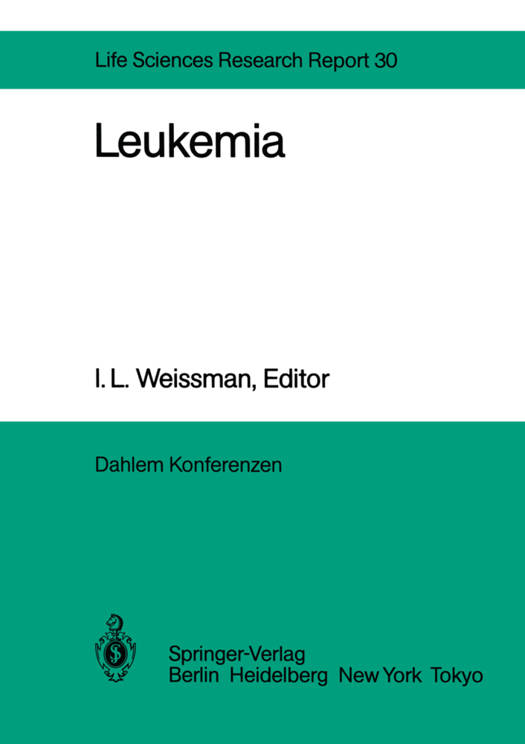
Leukemia
Report of the Dahlem Workshop on Leukemia Berlin 1983, November 13-18
€ 150,48
+ 300 punten
Omschrijving
and how the known vertebrate homologues of these genes are expressed normally in differentiation and proliferation pathways as well as abnormal- ly in well-defined lymphomagenic and other oncogenic pathways. What emerged from this meeting are a better understanding of the evolution of these gene systems themselves and an elucidation of simpler systems open to more rapid genetic and molecular genetic analysis to reveal the normal functions of these genes and their gene products. Thus we sought new answers to several old questions concerning differenti- ation, proliferation, and neoplastic transformation. We gathered together in an unusual format - that of the unique Dahlem Workshops - not just to reiterate data which has recently emerged but to think about how these findings might lead to new approaches for the understanding and therapy of the leukemias and lymphomas. We deliberately chose experts from several different disciplines, ranging from the clinicians who diag- nose, describe, and treat these maladies, to the molecular geneticists trying to reduce the analysis of the problem to its simplest variables in the simplest systems possible.
Specificaties
Betrokkenen
- Uitgeverij:
Inhoud
- Aantal bladzijden:
- 318
- Taal:
- Engels
- Reeks:
- Reeksnummer:
- nr. 30
Eigenschappen
- Productcode (EAN):
- 9783642697241
- Verschijningsdatum:
- 20/11/2011
- Uitvoering:
- Paperback
- Formaat:
- Trade paperback (VS)
- Afmetingen:
- 148 mm x 210 mm
- Gewicht:
- 399 g


Alleen bij Standaard Boekhandel
+ 300 punten op je klantenkaart van Standaard Boekhandel

Beoordelingen
We publiceren alleen reviews die voldoen aan de voorwaarden voor reviews. Bekijk onze voorwaarden voor reviews.