



Je cadeautjes zeker op tijd in huis hebben voor de feestdagen? Kom langs in onze winkels en vind het perfecte geschenk!
- Afhalen na 1 uur in een winkel met voorraad
- Gratis thuislevering in België vanaf € 30
- Ruim aanbod met 7 miljoen producten
Je cadeautjes zeker op tijd in huis hebben voor de feestdagen? Kom langs in onze winkels en vind het perfecte geschenk!
- Afhalen na 1 uur in een winkel met voorraad
- Gratis thuislevering in België vanaf € 30
- Ruim aanbod met 7 miljoen producten





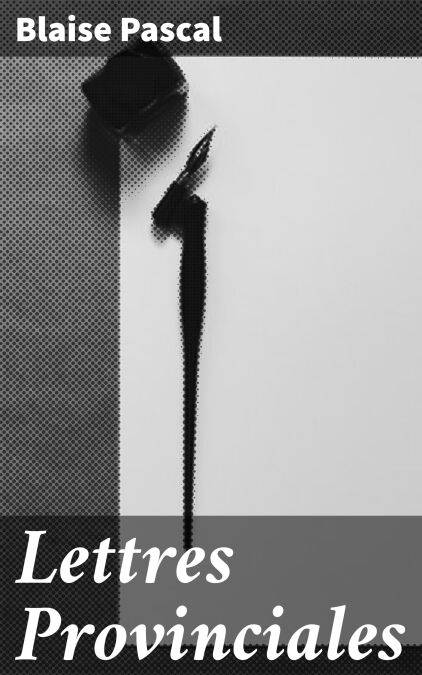
Lettres Provinciales E-BOOK
Defending Faith with Satire and Logic: A 17th-Century French Classic
Blaise Pascal
E-book | Engels
€ 1,99
+ 1 punten
Omschrijving
Blaise Pascal's 'Lettres Provinciales' is a collection of eighteen letters written in the mid-17th century, which were initially created as a defense of Antoine Arnauld, a Jansenist theologian. Pascal's eloquent and persuasive writing style in these letters resulted in their publication as a book. The content of the letters criticizes Jesuit moral theology and defends the Jansenist position on grace, creating a significant impact in the literary and theological context of the time. Pascal's use of satire, wit, and logical arguments makes 'Lettres Provinciales' a remarkable example of French prose of the period. The letters are not only a critique of Jesuit casuistry but also a reflection on faith, reason, and morals. Blaise Pascal, a mathematician, physicist, and philosopher, was deeply religious, which influenced his writing. His background in mathematics and philosophy gave him a unique perspective to address theological issues with logical rigor. 'Lettres Provinciales' is recommended to readers interested in 17th-century French literature, theology, and philosophy, as it offers a captivating blend of erudition and rhetoric.
Specificaties
Betrokkenen
- Auteur(s):
- Vertaler(s):
- Uitgeverij:
Inhoud
- Aantal bladzijden:
- 263
- Taal:
- Engels
Eigenschappen
- Productcode (EAN):
- 4064066466701
- Verschijningsdatum:
- 9/04/2021
- Uitvoering:
- E-book
- Beveiligd met:
- Digital watermarking
- Formaat:
- ePub


Alleen bij Standaard Boekhandel
+ 1 punten op je klantenkaart van Standaard Boekhandel
CADEAU


Beoordelingen
We publiceren alleen reviews die voldoen aan de voorwaarden voor reviews. Bekijk onze voorwaarden voor reviews.