


- Afhalen na 1 uur in een winkel met voorraad
- Gratis thuislevering in België vanaf € 30
- Ruim aanbod met 7 miljoen producten
- Afhalen na 1 uur in een winkel met voorraad
- Gratis thuislevering in België vanaf € 30
- Ruim aanbod met 7 miljoen producten





€ 33,00
+ 66 punten
Omschrijving
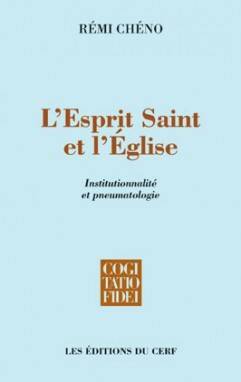
La grâce divine peut certes se donner au croyant individuel comme un don illuminateur, libérateur ou réconciliateur. Mais, en particulier à travers les actions sacramentelles de la liturgie, elle vient habiter réellement notre histoire et y inscrit comme des « traces instituantes du Royaume ». Comment pourrait-on parler des chemins de la grâce dans notre monde et dans notre histoire sinon comme les chemins chaotiques d'une humanité fragile et pécheresse ? « Traces », et donc des réalités fragiles et fugitives, certes, mais traces pourtant « instituantes », c'est-à-dire portant un fruit, produisant une oeuvre. L'approche catholique classique présente le Christ comme le fondateur de l'Église et des institutions qui la structurent il est ainsi constitué en principe d'autorité et en source du droit ecclésial, de lui dérivent l'autorité hiérarchique des ministères et l'organisation juridique qui régit son corps. Selon l'approche pneumatologique, ou bien l'Esprit est dévalué comme simple agent envoyé par le Christ au service de l'animation de son Église à travers ses membres et son action gracieuse dans les coeurs, ou bien on met tellement en avant la liberté charismatique qu'elle se retrouve en conflit avec les institutions ecclésiales. Rémi Chéno retrace l'histoire de ces antagonismes, d'origine protestante, entre institution et communion, et les approches de type sociologique qui en ont été tentées. Faisant droit à l'histoire de la théorie institutionnaliste, en particulier chez le juriste Maurice Hauriou, fondateur de l'école institutionnaliste française, ainsi qu'aux recherches d'un fondement théologique du droit institutionnel, en particulier chez le luthérien Hans Dombois, qui dessinent le cadre de sa réflexion, il élabore une théologie de l'institution placée sous le signe eschatologique du Royaume où l'agir gracieux de l'Esprit apparaît comme un processus instituant qui donne au Christ son Corps total, l'Église. Dans cette thèse, résolument novatrice et courageuse, Rémi Chéno cherche à dépasser les fausses dialectiques qui ont envahi le discours ecclésiologique selon le paradigme de l'antagonisme fondation/institution par une théologie de l'institution articulée à une pneumatologie.
--
Divine grace can, of course, be bestowed on the individual believer as an enlightening and liberating gift. But in particular through the sacramental acts of liturgy, it also lives in our history, where it is inscribed as one of the ‘instituting traces of the Kingdom'. How can we avoid seeing the ways of grace in our world and in our history as chaotic paths of a fragile and sinning humanity? ‘Traces' are of course fragile and fugitive evidence, yet these are instituting traces, they bear fruit, they produce a work. The classical Catholic approach presents Christ as the founder of the Church and the institutions that structure it consequently the Church constitutes a principle of authority and a source of ecclesial law. From it emanate the hierarchical authority of ministries and the legal organisation that governs the body of the Church. According to the pneumatological approach, either the Spirit is reduced to a mere agent sent by Christ to serve and breathe life into his Church through its members and its acts of grace in men's hearts, or charismatic freedom takes the front to such an extent that it enters into conflict with the ecclesial institutions. Rémi Chéno retraces the history of such antagonisms - of Protestant origin - between the institution and communion, and the sociological-type approaches that have been attempted. The author pays reverence to the history of institutionalist theory, especially in the work of the jurist Maurice Hauriou, founder of the French institutionalist school. Also to the search for a theological foundation for institutional law, as observed in the work the Lutherian Hans Dombois. Both delineate the outlines of this reflection in which he elaborates a theology of the institution placed under the eschatological sign of the Kingdom, where the Spirit's acts of grace appear as an insitituting process that gives Christ his entire Body, the Church. In this thesis, resolutely innovating and couragous, Rémi Chéno attempts to reach beyond the false dialectics that invaded ecclesiological discourse by proposing a theology of the institution rooted in a theology of the Spirit.
--
Divine grace can, of course, be bestowed on the individual believer as an enlightening and liberating gift. But in particular through the sacramental acts of liturgy, it also lives in our history, where it is inscribed as one of the ‘instituting traces of the Kingdom'. How can we avoid seeing the ways of grace in our world and in our history as chaotic paths of a fragile and sinning humanity? ‘Traces' are of course fragile and fugitive evidence, yet these are instituting traces, they bear fruit, they produce a work. The classical Catholic approach presents Christ as the founder of the Church and the institutions that structure it consequently the Church constitutes a principle of authority and a source of ecclesial law. From it emanate the hierarchical authority of ministries and the legal organisation that governs the body of the Church. According to the pneumatological approach, either the Spirit is reduced to a mere agent sent by Christ to serve and breathe life into his Church through its members and its acts of grace in men's hearts, or charismatic freedom takes the front to such an extent that it enters into conflict with the ecclesial institutions. Rémi Chéno retraces the history of such antagonisms - of Protestant origin - between the institution and communion, and the sociological-type approaches that have been attempted. The author pays reverence to the history of institutionalist theory, especially in the work of the jurist Maurice Hauriou, founder of the French institutionalist school. Also to the search for a theological foundation for institutional law, as observed in the work the Lutherian Hans Dombois. Both delineate the outlines of this reflection in which he elaborates a theology of the institution placed under the eschatological sign of the Kingdom, where the Spirit's acts of grace appear as an insitituting process that gives Christ his entire Body, the Church. In this thesis, resolutely innovating and couragous, Rémi Chéno attempts to reach beyond the false dialectics that invaded ecclesiological discourse by proposing a theology of the institution rooted in a theology of the Spirit.
Specificaties
Betrokkenen
- Auteur(s):
- Uitgeverij:
Inhoud
- Aantal bladzijden:
- 337
- Taal:
- Frans
Eigenschappen
- Productcode (EAN):
- 9782204093002
- Verschijningsdatum:
- 18/11/2010
- Uitvoering:
- Paperback
- Afmetingen:
- 135 mm x 215 mm
- Gewicht:
- 423 g


Alleen bij Standaard Boekhandel
+ 66 punten op je klantenkaart van Standaard Boekhandel
Cadeau

AANGERADEN


Beoordelingen
We publiceren alleen reviews die voldoen aan de voorwaarden voor reviews. Bekijk onze voorwaarden voor reviews.