


- Afhalen na 1 uur in een winkel met voorraad
- Gratis thuislevering in België vanaf € 30
- Ruim aanbod met 7 miljoen producten
- Afhalen na 1 uur in een winkel met voorraad
- Gratis thuislevering in België vanaf € 30
- Ruim aanbod met 7 miljoen producten





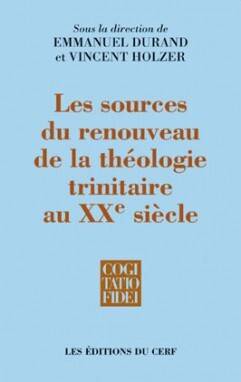
LES SOURCES DU RENOUVEAU DE LA THEOLOGIE TRINITAIRE AU XXE SIECLE
Holzer Vincent, Durand Emmanuel
Paperback | Frans
€ 38,00
+ 76 punten
Omschrijving
À partir d'où et de quelle façon penser le mystère de la Trinité, non pour le rationaliser, mais pour le confesser, en vivre et le prêcher - tel fut le souci initial des premières élaborations trinitaires, tel fut aussi l'aiguillon du renouveau dont le XXe siècle a été le cadre. Trinité et création, Trinité et grâce, Trinité et salut, et plus largement Trinité et histoire, tels sont les « lieux » théologiques que la foi trinitaire éclaire et structure, en vue de nouvelles synthèses et de plus fortes connexions. L'ensemble des contributions de l'ouvrage, qui rassemble les fruits d'une recherche menée conjointement par des spécialistes reconnus, se saisit des oeuvres et des conditions qui ont permis le renouveau multiforme de la doctrine trinitaire au XXe siècle. La complexité du dossier exigeait que l'on adoptât un objectif clair et délimité : la mise en lumière des sources et des facteurs qui ont participé de manière décisive à la réalité de ce renouveau. Notre choix s'est donc tout naturellement porté sur des oeuvres emblématiques, spécialement celles de Karl Barth, Hans Urs von Balthasar, Karl Rahner et Wolfhart Pannenherg. Un tel renouveau n'aurait pourtant pas été possible sans la mutation qui a affecté la rationalité philosophique, la théologie patristique et la référence médiévale dans certaines décennies du XXe siècle. Le vocabulaire du « renouveau » est parfois employé par mode de facilité. Il doit assurément faire l'épreuve de sa pertinence. La recherche entreprise se propose précisément d'identifier les sources, de clarifier les contours et de vérifier le bien-fondé du nouvel élan des théologies trinitaires. Elle aboutit à une vision d'ensemble précise et offre un bilan prospectif des nouveaux défis qui sont les nôtres.
--
How should we think the mystery of the Trinity, and what should we adopt as our point of departure? To ‘think' not in order to rationalize that mystery, but to confess, to live and to preach it? Those questions guided the first Trinitarian reflections, just as they guided the 20th century renewal. Trinity and creation, Trinity and grace, Trinity and salvation, and, more broadly, Trinity and history: those are the theological areas enlightened and structured by Trinitarian faith in view of identifying new syntheses and stronger bonds. The ensemble of contributions in this book, which assembles the fruit of research conducted by renowned specialists, focuses on the works and the conditions which allowed the multi-facetted renewal of the Trinitarian doctrine in the 20th century. The complexity of the subject demanded a clear and unlimited objective: the identification of sources and factors which participated, in a decisive way, to the reality of that renewal. Our favour, quite naturally, fell upon emblematic works - especially those of Karl Barth, Hans Urs von Balthasar, Karl Rahner and Wolfhart Pannenherg. Such a revival would not have possible without the mutation which affected philosophical reasoning, patristic theology and Medieval references in certain decades of the 20th century. We have sometimes used the term ‘renewal' out of facility. Its pertinence must yet be put to the test. The research undertaken proposes, in concrete terms, to identify the sources, clarify the definitions and substantiate the validity of this new surge of Trinitarian theology. The result is a precise global vision which offers an appraisal of those future challenges we must assume.
--
How should we think the mystery of the Trinity, and what should we adopt as our point of departure? To ‘think' not in order to rationalize that mystery, but to confess, to live and to preach it? Those questions guided the first Trinitarian reflections, just as they guided the 20th century renewal. Trinity and creation, Trinity and grace, Trinity and salvation, and, more broadly, Trinity and history: those are the theological areas enlightened and structured by Trinitarian faith in view of identifying new syntheses and stronger bonds. The ensemble of contributions in this book, which assembles the fruit of research conducted by renowned specialists, focuses on the works and the conditions which allowed the multi-facetted renewal of the Trinitarian doctrine in the 20th century. The complexity of the subject demanded a clear and unlimited objective: the identification of sources and factors which participated, in a decisive way, to the reality of that renewal. Our favour, quite naturally, fell upon emblematic works - especially those of Karl Barth, Hans Urs von Balthasar, Karl Rahner and Wolfhart Pannenherg. Such a revival would not have possible without the mutation which affected philosophical reasoning, patristic theology and Medieval references in certain decades of the 20th century. We have sometimes used the term ‘renewal' out of facility. Its pertinence must yet be put to the test. The research undertaken proposes, in concrete terms, to identify the sources, clarify the definitions and substantiate the validity of this new surge of Trinitarian theology. The result is a precise global vision which offers an appraisal of those future challenges we must assume.
Specificaties
Betrokkenen
- Auteur(s):
- Uitgeverij:
Inhoud
- Aantal bladzijden:
- 316
- Taal:
- Frans
Eigenschappen
- Productcode (EAN):
- 9782204086233
- Verschijningsdatum:
- 1/09/2008
- Uitvoering:
- Paperback
- Afmetingen:
- 135 mm x 215 mm
- Gewicht:
- 414 g


Alleen bij Standaard Boekhandel
+ 76 punten op je klantenkaart van Standaard Boekhandel
Cadeau

AANGERADEN


Beoordelingen
We publiceren alleen reviews die voldoen aan de voorwaarden voor reviews. Bekijk onze voorwaarden voor reviews.