



Bedankt voor het vertrouwen het afgelopen jaar! Om jou te bedanken bieden we GRATIS verzending (in België) aan op alles gedurende de hele maand januari.
- Afhalen na 1 uur in een winkel met voorraad
- In januari gratis thuislevering in België
- Ruim aanbod met 7 miljoen producten
Bedankt voor het vertrouwen het afgelopen jaar! Om jou te bedanken bieden we GRATIS verzending (in België) aan op alles gedurende de hele maand januari.
- Afhalen na 1 uur in een winkel met voorraad
- In januari gratis thuislevering in België
- Ruim aanbod met 7 miljoen producten





Omschrijving
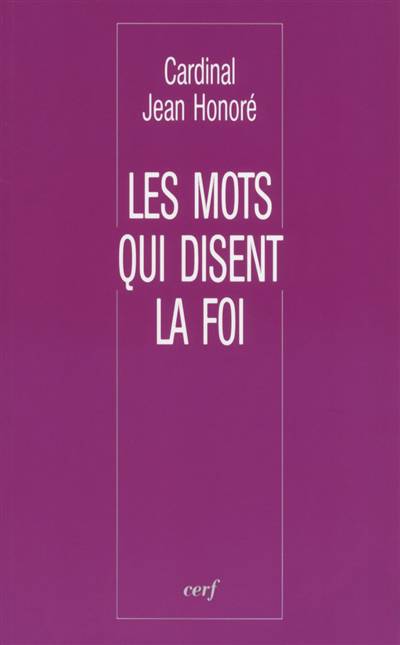
Ce petit manuel se donne pour objectif de dénombrer les mots qui appartiennent au vocabulaire chrétien et d'en offrir un commentaire. C'est un précis doctrinal qui n'a d'autre ambition que de répondre au besoin de connaître et de comprendre les mots qui disent le bonheur de croire. Simple « précis doctrinal », il se destine à quiconque veut pénétrer le paysage de la foi, découvrir les chemins qui le traversent, apprendre les notions qui le décrivent. Sans doute les catéchistes y trouveront une vraie utilité, mais aussi tout croyant — voire quiconque cherche à s'éclairer sur la foi chrétienne — pourra y trouver son compte, ne serait-ce qu'au titre d'une initiation qui peut conduire à une étude plus complète, comme celle du « Catéchisme de l'Église catholique ». Ce livre s'organise autour des trois axes de la foi : les vérités du « Credo », la liturgie et les sacrements, la morale et le décalogue. On retrouve la répartition classique qui considère la foi qui est « crue, célébrée, vécue ». Le lecteur appréciera la structure de l'ouvrage. À chaque étape de sa lecture, il aura pour repères trois axes : un énoncé, « Je crois », qui fait le commentaire de ce qui est donné à connaître. Un deuxième axe, « J'écoute », qui présente des références tirées de la longue tradition des maîtres de la foi. Enfin, la troisième rubrique, « Je prie », suggère la réflexion spirituelle et la prière. Le cardinal Honoré est fort d'une longue expérience de la prédication et d'un engagement infatigable au service de la catéchèse. Il formule lui-même son ambition en écrivant ce livre : « Me fera-t-on crédit de ne pas viser une autre fin que celle de saint Augustin qui souhaitait parler de telle manière que l'auditeur écoute, qu'en écoutant il croie, que, en croyant, il espère et il aime" » ? Le lecteur ne pourra que constater, grâce à Jean Honoré que, sur le chemin des mots de la foi, l'amour est à chaque pas !
--
This little manual provides a list of words that belong to the Christian vocabulary and completes them with a commentary. It is a doctrinal handbook whose only ambition is to respond to the need to know and understand the words that express the joy of believing. A simple ‘doctrinal handbook', it is intended for anyone who wishes to enter into the domain of faith, discover its many paths, learn the notions that define it. Undoubtedly, catechists will find it very useful, but all believers— indeed anyone who wants to know about the Christian faith— will find it well worthwhile, if only as an initiation perhaps leading on to a fuller study, like the ‘Catechism of the Catholic Church'. The contents are organized around three axes of faith: the truths of the ‘Creed' liturgy and the sacraments morals and the Decalogue. Readers will find the classic distribution which considers faith as ‘believed, celebrated, lived'. They will also appreciate the structure of this work. At each stage, there are three axes: a proclamation, ‘I believe', which forms the commentary of what is presented. A second axis, ‘I listen', presents references drawn from the long tradition of the Masters. Lastly, the third axis, ‘I pray', suggests spiritual reflection and prayer. Cardinal Honoré has many years of experience in preaching and tireless engagement in the service of the catechism. In writing this book , he expressed his own ambition: ‘I hope people will give me credit for having no other aim than that of Saint Augustine, who wished to speak "in such a way that the hearer would listen, and in listening, believe and in believing, hope and love".' Thanks to Jean Honoré, readers will observe that on the ‘path of words' that leads to faith, love is in each and every step!"
--
This little manual provides a list of words that belong to the Christian vocabulary and completes them with a commentary. It is a doctrinal handbook whose only ambition is to respond to the need to know and understand the words that express the joy of believing. A simple ‘doctrinal handbook', it is intended for anyone who wishes to enter into the domain of faith, discover its many paths, learn the notions that define it. Undoubtedly, catechists will find it very useful, but all believers— indeed anyone who wants to know about the Christian faith— will find it well worthwhile, if only as an initiation perhaps leading on to a fuller study, like the ‘Catechism of the Catholic Church'. The contents are organized around three axes of faith: the truths of the ‘Creed' liturgy and the sacraments morals and the Decalogue. Readers will find the classic distribution which considers faith as ‘believed, celebrated, lived'. They will also appreciate the structure of this work. At each stage, there are three axes: a proclamation, ‘I believe', which forms the commentary of what is presented. A second axis, ‘I listen', presents references drawn from the long tradition of the Masters. Lastly, the third axis, ‘I pray', suggests spiritual reflection and prayer. Cardinal Honoré has many years of experience in preaching and tireless engagement in the service of the catechism. In writing this book , he expressed his own ambition: ‘I hope people will give me credit for having no other aim than that of Saint Augustine, who wished to speak "in such a way that the hearer would listen, and in listening, believe and in believing, hope and love".' Thanks to Jean Honoré, readers will observe that on the ‘path of words' that leads to faith, love is in each and every step!"
Specificaties
Betrokkenen
- Auteur(s):
- Uitgeverij:
Inhoud
- Aantal bladzijden:
- 188
- Taal:
- Frans
Eigenschappen
- Productcode (EAN):
- 9782204087674
- Verschijningsdatum:
- 25/05/2009
- Uitvoering:
- Paperback
- Afmetingen:
- 140 mm x 220 mm
- Gewicht:
- 240 g



Alleen bij Standaard Boekhandel
+ 46 punten op je klantenkaart van Standaard Boekhandel
SOLDEN


Beoordelingen
We publiceren alleen reviews die voldoen aan de voorwaarden voor reviews. Bekijk onze voorwaarden voor reviews.