



Bedankt voor het vertrouwen het afgelopen jaar! Om jou te bedanken bieden we GRATIS verzending (in België) aan op alles gedurende de hele maand januari.
- Afhalen na 1 uur in een winkel met voorraad
- In januari gratis thuislevering in België
- Ruim aanbod met 7 miljoen producten
Bedankt voor het vertrouwen het afgelopen jaar! Om jou te bedanken bieden we GRATIS verzending (in België) aan op alles gedurende de hele maand januari.
- Afhalen na 1 uur in een winkel met voorraad
- In januari gratis thuislevering in België
- Ruim aanbod met 7 miljoen producten





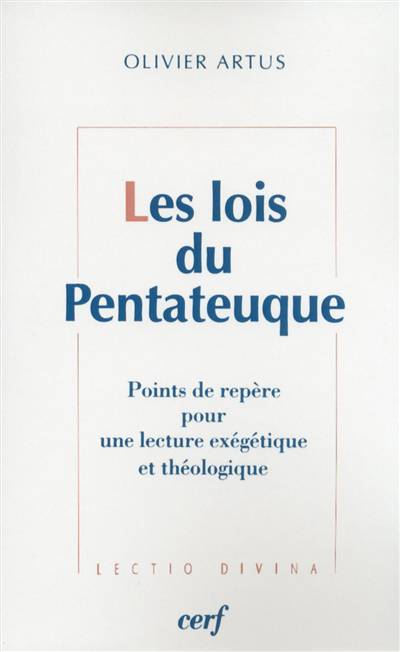
Les lois du Pentateuque
points de repère pour une lecture exégétique et théologique
Olivier Artus
Paperback | Frans
€ 25,00
+ 50 punten
Omschrijving
Le lecteur qui aborde les textes législatifs du Pentateuque est confronté à une impression de complexité et d'extrême diversité : diversité de contenu, diversité d'autorité, diversité de fondement théologique des lois rassemblées dans un même ensemble littéraire : la « Torah ». L'auteur propose ici des points de repère méthodologiques permettant une interprétation du texte biblique qui prenne en compte différentes approches : analyse structurelle et lecture synchronique, critique socio-historique. La mise en oeuvre de méthodes de lecture diverses et complémentaires apparaît en effet comme un préalable nécessaire à l'interprétation du texte. Ainsi, la juste compréhension des énoncés législatifs suppose qu'ils soient resitués dans leur contexte narratif d'énonciation, tout comme elle implique que soient précisés la généalogie des différents textes, leurs éventuelles relations de dépendance, le rapport de continuité ou de discontinuité qu'ils entretiennent avec les textes législatifs du Proche-Orient ancien. Cette approche diversifiée des lois du Pentateuque est effectuée à partir d'exemples significatifs : les prescriptions traitant de la libération périodique des esclaves, les lois concernant les catégories sociales les plus pauvres, les textes législatifs faisant appel à la règle du talion. L'étude entreprise permet de conclure à la nécessité d'une interprétation canonique du texte biblique, interprétation qui, tout en tenant compte du degré d'« autorité » des différents énoncés, contribue à en permettre une lecture théologique. -- The reader approaching the legislative texts of the Pentateuch will be faced with an impression of complexity and extreme diversity: diversity of content, diversity of legitimacy and diversity in the theological foundation of the laws that are brought together in one literary work - the Torah. The author proposes a method of interpretation that allows us to take into account different approaches to Biblical texts: structural analysis, synchronic reading and socio-historical critique. It emerges that diverse and complementary reading methods are an essential prelude to interpretation. This being so, we can only understand the written laws if we place them in their original narrative context just as we must be aware of the genealogy of the different texts, any interdependence that may exist and the continuity or discontinuity between them and the ancient legislative texts of the Middle East. This multi-discipline approach to the laws of the Pentateuch is illustrated using some noteworthy examples: texts authorising the occasional freeing of slaves, those concerning the poor, those that refer to the law of talion. The author succeeds in convincing us that canonical analysis of biblical texts is indeed necessary and that interpretation that takes account of a text's degree of ‘authority' permits us to proceed to a theological reading."
Specificaties
Betrokkenen
- Auteur(s):
- Uitgeverij:
Inhoud
- Aantal bladzijden:
- 214
- Taal:
- Frans
Eigenschappen
- Productcode (EAN):
- 9782204073790
- Verschijningsdatum:
- 17/03/2005
- Uitvoering:
- Paperback
- Afmetingen:
- 140 mm x 220 mm
- Gewicht:
- 260 g


Alleen bij Standaard Boekhandel
+ 50 punten op je klantenkaart van Standaard Boekhandel
SOLDEN


Beoordelingen
We publiceren alleen reviews die voldoen aan de voorwaarden voor reviews. Bekijk onze voorwaarden voor reviews.