


- Afhalen na 1 uur in een winkel met voorraad
- Gratis thuislevering in België vanaf € 30
- Ruim aanbod met 7 miljoen producten
- Afhalen na 1 uur in een winkel met voorraad
- Gratis thuislevering in België vanaf € 30
- Ruim aanbod met 7 miljoen producten





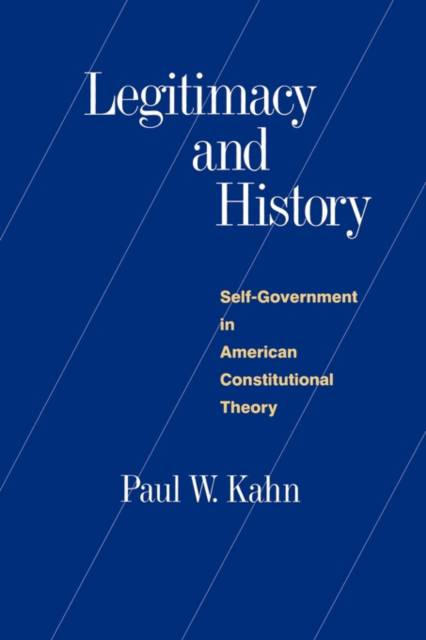
Legitimacy and History
Self-Government in American Constitutional Theory
Paul W Kahn
Paperback | Engels
€ 64,45
+ 128 punten
Uitvoering
Omschrijving
This provocative book is both a rich intellectual history of 200 years of American constitutional theory and a major contribution to that theory. Paul Kahn argues that self-government is impossible within the constraints placed on government by the Constitution, and that constitutional theory-which attempts to reconcile self-government and history-will never achieve its goal. "I do not know of another book that participates in the constitutional dialogue with the mixture of historical perspective and acute critical eye displayed in this book. It demonstrates sweep, originality, careful criticism, and flashes of insight throughout."-Steven H. Shiffrin "A fascinating and richly nuanced intellectual history and critique of American constitutional theory. It contains original and important insights not only about historical developments, but also about the predicament of contemporary constitutional thought. . . . Nowhere have I encountered a more engaging book about constitutional theory. Kahn brings a wealth of historical resources to bear, and he offers a probing analytical critique of the materials that he confronts. His description of recent works of constitutional theory is lucid, sometimes more so than the originals. He cuts to the heart of each theoretical effort and deftly exposes its primary weaknesses. . . What is more, he ties his book together with an original and provocative explanation of the historical progression of constitutional thought."-Daniel O. Conkle, Constitutional Commentary "A rich and insightful history of constitutional theory in America."-Leslie Friedman Goldstein, Journal of Politics
Specificaties
Betrokkenen
- Auteur(s):
- Uitgeverij:
Inhoud
- Aantal bladzijden:
- 272
- Taal:
- Engels
Eigenschappen
- Productcode (EAN):
- 9780300063073
- Verschijningsdatum:
- 22/02/1995
- Uitvoering:
- Paperback
- Formaat:
- Trade paperback (VS)
- Afmetingen:
- 152 mm x 233 mm
- Gewicht:
- 412 g



Alleen bij Standaard Boekhandel
+ 128 punten op je klantenkaart van Standaard Boekhandel
Cadeau

AANGERADEN


Beoordelingen
We publiceren alleen reviews die voldoen aan de voorwaarden voor reviews. Bekijk onze voorwaarden voor reviews.