


- Afhalen na 1 uur in een winkel met voorraad
- Gratis thuislevering in België vanaf € 30
- Ruim aanbod met 7 miljoen producten
- Afhalen na 1 uur in een winkel met voorraad
- Gratis thuislevering in België vanaf € 30
- Ruim aanbod met 7 miljoen producten





€ 93,45
+ 186 punten
Omschrijving
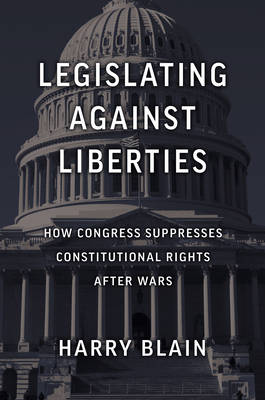
A sobering and eyeopening indictment that Congress has consistently been the most dangerous branch of government when it comes to protecting, and undermining, civil liberties--particularly in the wake of military conflict.
Why do wartime restrictions on civil liberties outlive their original justifications? Scholars have long argued that the blame lies with the executive branch of government. Their logic is straightforward: during war, lawmakers require (in Alexander Hamilton's words) "decision, activity, secrecy, and dispatch," so they choose to enable executive leadership. Executives promise to wield extraordinary powers temporarily, only to entrench them indefinitely. This book tests how these claims hold up in four pivotal moments in US history: the Civil War, World War I, World War II, and Vietnam. Ultimately, it finds them wanting.
Harry Blain argues that national legislators are decisive in sustaining postwar restrictions on civil liberties. These elected officials have formidable tools at their disposal, including powers over the rules and membership of their own institution, the funding and personnel of the executive branch, the jurisdiction of federal courts, and the priorities of state and local governments. These tools make Congress, not the executive, the primary institutional threat to civil liberties in the aftermath of war. For example, the House used its exclusion power to refuse to seat the socialist Victor Berger, disenfranchising voters in the process; Congress used its power to compel testimony during the Red Scares in an effort to discredit and humiliate their political enemies; and legislators have removed, or threatened to remove, Supreme Court jurisdiction over habeas corpus petitions throughout US history.
In a time where the president and the Supreme Court are seen as the most dangerous branches of government, Legislating Against Liberties is a sober reminder that Congress has historically been at the vanguard of undermining democracy and liberty.
Specificaties
Betrokkenen
- Auteur(s):
- Uitgeverij:
Inhoud
- Aantal bladzijden:
- 272
- Taal:
- Engels
- Reeks:
Eigenschappen
- Productcode (EAN):
- 9780700641055
- Verschijningsdatum:
- 31/03/2026
- Uitvoering:
- Hardcover
- Formaat:
- Genaaid
- Afmetingen:
- 152 mm x 229 mm
- Gewicht:
- 539 g


Alleen bij Standaard Boekhandel
+ 186 punten op je klantenkaart van Standaard Boekhandel
Cadeau

AANGERADEN


Beoordelingen
We publiceren alleen reviews die voldoen aan de voorwaarden voor reviews. Bekijk onze voorwaarden voor reviews.