


- Afhalen na 1 uur in een winkel met voorraad
- Gratis thuislevering in België vanaf € 30
- Ruim aanbod met 7 miljoen producten
- Afhalen na 1 uur in een winkel met voorraad
- Gratis thuislevering in België vanaf € 30
- Ruim aanbod met 7 miljoen producten





Omschrijving
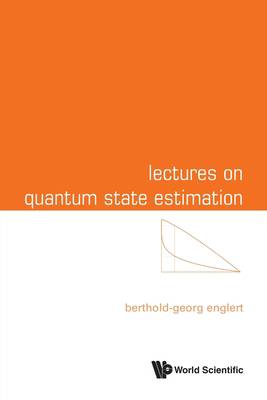
This is the 7th book in the author's "Lectures on ..." book series, and the first aimed at graduate-level readers (two additional graduate texts are in preparation). Primarily intended for physics graduate students, the book is accessible to advanced undergraduates and will appeal to students with a background in statistics and a keen interest in quantum physics. By the end of this book, readers will be well-prepared for working on research projects that require the drawing of inference from the noisy data collected in quantum experiments, as epitomized by quantum state estimation.
The book begins with chapters on the basics of estimation theory and the basics of quantum theory. This includes, in particular, the roles played by the frequentist methods of statistics, which are crucial when planning an experiment, and the Bayesian methods, which are the tools for drawing inference from the actual data gathered. A central concept is that of optimal error regions that supplement the point estimators ("best guesses") with the analogs of error bars in the high-dimensional parameter space; there is, in particular, the plausible region which comprises all point estimators supported by the data.
Practical applications require the evaluation of high-dimensional integrals with the aid of Monte Carlo integration. For that, one needs to draw samples of quantum states from the relevant distributions, namely the priors and posteriors of Bayesian methodology. The book discusses the algorithms well-suited for this kind of sampling, which is central to the processing of real-life data.
The book illustrates all concepts with pertinent examples and offers numerous exerciseswhich the readers can practice and perfect their skills with. The presentation is detailed and does not skip technical steps, which makes the book particularly valuable for self-studying readers and as textbook adopted by lecturers teaching courses on this or related topics. While the book is based on lecture notes developed for the author's courses on quantum state estimation at NUS and BIT, this book also offers a comprehensive account of the concepts and methods developed in the author's group at CQT and presents this material in textbook form for the first time.
Specificaties
Betrokkenen
- Auteur(s):
- Uitgeverij:
Inhoud
- Aantal bladzijden:
- 356
- Taal:
- Engels
Eigenschappen
- Productcode (EAN):
- 9789819815791
- Verschijningsdatum:
- 2/11/2025
- Uitvoering:
- Paperback
- Formaat:
- Trade paperback (VS)
- Afmetingen:
- 152 mm x 229 mm
- Gewicht:
- 476 g


Alleen bij Standaard Boekhandel
Cadeau

AANGERADEN


Beoordelingen
We publiceren alleen reviews die voldoen aan de voorwaarden voor reviews. Bekijk onze voorwaarden voor reviews.