


- Afhalen na 1 uur in een winkel met voorraad
- Gratis thuislevering in België vanaf € 30
- Ruim aanbod met 7 miljoen producten
- Afhalen na 1 uur in een winkel met voorraad
- Gratis thuislevering in België vanaf € 30
- Ruim aanbod met 7 miljoen producten





€ 16,00
+ 32 punten
Omschrijving
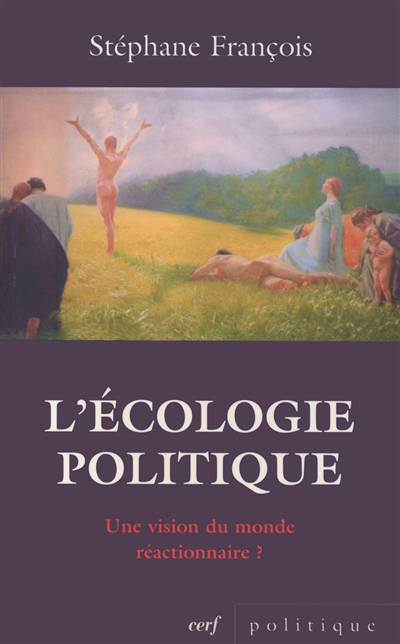
L'écologie politique est devenue depuis le milieu des années 1980 une force politique majeure dans notre, pays, et dans d'autres pays occidentaux. Cependant, elle recouvre des sensibilités idéologiques très diverses allant du progressisme au conservatisme, voire à une attitude réactionnaire. La diversité du tissu associatif montre la pluralité de l'expression. Le mérite de Stéphane François est de nous aider à saisir ces nuances en donnant une présentation précise, érudite même, et pourtant claire des groupes et courants concernés. Son propos pourra parfois apparaître un peu provocateur : alors qu'il est de bon ton de considérer que l'écologie politique se situe à gauche du spectre politique, il présente des aspects de droite qui animent aussi celle-ci, ou qui même déterminent une part importante de sa conception du monde. Cet ouvrage souligne, en effet, les aspects nostalgiques, technophobes et parfois antilibéraux, qui s'expriment dans les textes et les discours. Il montre aussi l'existence d'une écologie d'extrême droite, voire néo-païenne, assez vivace qui coexiste avec des formations plus établies. Cette approche novatrice permet de comprendre cette configuration droitière de l'écologie politique, sans pour autant porter de jugements sommaires sur les discours analysés.
--
Since the mid-1980s, political ecology has become a major political force in our country and others in the western hemisphere. However, the term covers a great diversity of ideological sensibilities ranging from progressivism to conservatism, sometimes even demonstrating a reactionary attitude. The diverse nature of the network of associations reveals the multiplicity of expression. Stéphane François' book enables us to grasp these nuances by providing a precise, even erudite over-all picture of the groups and currents concerned, without losing its clarity. His remarks may seem somewhat provocative. It is fashionable today to regard political ecology as being situated to the left of the political spectrum yet he reveals right-leaning aspects of the movement which even determine a significant part of its concept of the world. In fact this book underlines the nostalgic, technophobe and sometimes anti-liberal aspects that come across in the texts and speeches. It also proves the existence of a somewhat deep-rooted, far right - even neo-pagan - ecology that co-exists alongside more established groups. This novel approach brings an understanding of this right-wing configuration of political ecology, without passing cursory judgement on the views under analysis.
--
Since the mid-1980s, political ecology has become a major political force in our country and others in the western hemisphere. However, the term covers a great diversity of ideological sensibilities ranging from progressivism to conservatism, sometimes even demonstrating a reactionary attitude. The diverse nature of the network of associations reveals the multiplicity of expression. Stéphane François' book enables us to grasp these nuances by providing a precise, even erudite over-all picture of the groups and currents concerned, without losing its clarity. His remarks may seem somewhat provocative. It is fashionable today to regard political ecology as being situated to the left of the political spectrum yet he reveals right-leaning aspects of the movement which even determine a significant part of its concept of the world. In fact this book underlines the nostalgic, technophobe and sometimes anti-liberal aspects that come across in the texts and speeches. It also proves the existence of a somewhat deep-rooted, far right - even neo-pagan - ecology that co-exists alongside more established groups. This novel approach brings an understanding of this right-wing configuration of political ecology, without passing cursory judgement on the views under analysis.
Specificaties
Betrokkenen
- Auteur(s):
- Uitgeverij:
Inhoud
- Aantal bladzijden:
- 160
- Taal:
- Frans
Eigenschappen
- Productcode (EAN):
- 9782204097208
- Verschijningsdatum:
- 22/03/2012
- Uitvoering:
- Paperback
- Afmetingen:
- 140 mm x 220 mm
- Gewicht:
- 205 g



Alleen bij Standaard Boekhandel
+ 32 punten op je klantenkaart van Standaard Boekhandel

Beoordelingen
We publiceren alleen reviews die voldoen aan de voorwaarden voor reviews. Bekijk onze voorwaarden voor reviews.