


- Afhalen na 1 uur in een winkel met voorraad
- Gratis thuislevering in België vanaf € 30
- Ruim aanbod met 7 miljoen producten
- Afhalen na 1 uur in een winkel met voorraad
- Gratis thuislevering in België vanaf € 30
- Ruim aanbod met 7 miljoen producten





€ 174,45
+ 348 punten
Omschrijving
"Gregory′s book is an important and timely contribution to the literature on literacy, biliteracy, second language learning, and early childhood education, synthesizing cutting-edge research, perspectives, and teaching approaches in a clear and accessible way. Overall, it is a terrific resource."
--Dinah Volk
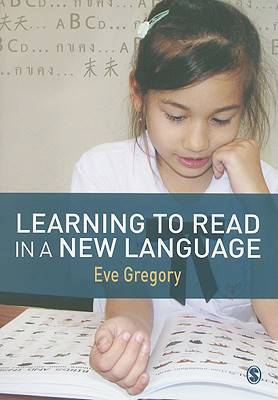
Across the world, an increasing number of young children are learning to read in languages different from their mother tongue, and there is a clear need for a book which addresses the ways in which these children should be taught. Eve Gregory′s book is unique in doing so.
Building upon the ideas proposed in Making Sense of a New World, this Second Edition widens its scope, arguing that policies designed for ′monolingual minds′ be limited, while those favoring methodologies which put plurilingualism in the centre of initial literacy tuition are promoted.
This book offers a practical reading program -- an ′Inside-Out′ (starting from experience) and ′Outside-In′ (starting from literature) approach to teaching which can be used with individuals, small groups, and whole classes. It uses current sociocultural theory, while drawing on examples of children from a variety of different countries who are engaged in learning to read nursery rhymes and songs, storybooks, letters, the Bible, and the Qur′an, in languages they do not speak fluently.
Gregory argues that, in order for literacy tuition to be successful, reading must make sense -- children must feel part of a community of readers. There is no common method which they use to learn, but rather a shared aim which they aspire to: making sense of a new world through new words.
--Dinah Volk
Across the world, an increasing number of young children are learning to read in languages different from their mother tongue, and there is a clear need for a book which addresses the ways in which these children should be taught. Eve Gregory′s book is unique in doing so.
Building upon the ideas proposed in Making Sense of a New World, this Second Edition widens its scope, arguing that policies designed for ′monolingual minds′ be limited, while those favoring methodologies which put plurilingualism in the centre of initial literacy tuition are promoted.
This book offers a practical reading program -- an ′Inside-Out′ (starting from experience) and ′Outside-In′ (starting from literature) approach to teaching which can be used with individuals, small groups, and whole classes. It uses current sociocultural theory, while drawing on examples of children from a variety of different countries who are engaged in learning to read nursery rhymes and songs, storybooks, letters, the Bible, and the Qur′an, in languages they do not speak fluently.
Gregory argues that, in order for literacy tuition to be successful, reading must make sense -- children must feel part of a community of readers. There is no common method which they use to learn, but rather a shared aim which they aspire to: making sense of a new world through new words.
Specificaties
Betrokkenen
- Auteur(s):
- Uitgeverij:
Inhoud
- Aantal bladzijden:
- 256
- Taal:
- Engels
Eigenschappen
- Productcode (EAN):
- 9781412928571
- Verschijningsdatum:
- 28/04/2008
- Uitvoering:
- Hardcover
- Formaat:
- Ongenaaid / garenloos gebonden
- Afmetingen:
- 168 mm x 239 mm
- Gewicht:
- 430 g


Alleen bij Standaard Boekhandel
+ 348 punten op je klantenkaart van Standaard Boekhandel
Cadeau

AANGERADEN


Beoordelingen
We publiceren alleen reviews die voldoen aan de voorwaarden voor reviews. Bekijk onze voorwaarden voor reviews.