


- Afhalen na 1 uur in een winkel met voorraad
- Gratis thuislevering in België vanaf € 30
- Ruim aanbod met 7 miljoen producten
- Afhalen na 1 uur in een winkel met voorraad
- Gratis thuislevering in België vanaf € 30
- Ruim aanbod met 7 miljoen producten





€ 43,45
+ 86 punten
Eenvoudig bestellen
Veilig betalen


Gratis thuislevering vanaf € 30 (via bpost)
Gratis levering in je Standaard Boekhandel
Omschrijving
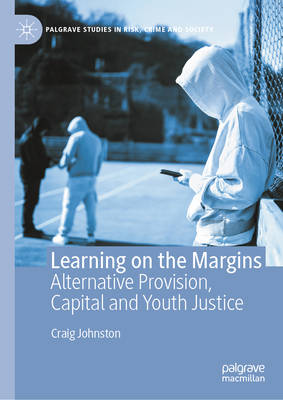
This book examines the role and significance of Alternative (Education) Provision (AP) in England, with a central focus on the inclusion and well-being of disadvantaged young people who are increasingly educated outside mainstream settings. Drawing on the author's 35-year involvement as an AP student, practitioner, leader and researcher, it offers a rare insider-informed perspective combined with a critical application of Bourdieu's capital theory. The distinctiveness of this title lies in its critical reframing of AP through the lens of capital theory, showing how social, cultural, human, and material resources are mobilized in ways that may sustain inequality while also opening spaces for agency and transformation. It situates AP within its historical, political, and policy contexts, exposing the hidden mechanisms that shape children and young people's experiences and unfolding futures. Although rooted in England, the analysis speaks to an international audience. Equivalent forms of AP exist in Australia, the USA, and across Europe, where debates around school exclusion, youth and social justice, and educational inequality share striking similarities. By maintaining disadvantaged children and young people at the center of analysis, this book contributes to global scholarship on inclusive education and to practical debates on how AP can be reimagined for more just outcomes.
Specificaties
Betrokkenen
- Auteur(s):
- Uitgeverij:
Inhoud
- Aantal bladzijden:
- 140
- Taal:
- Engels
- Reeks:
Eigenschappen
- Productcode (EAN):
- 9783032259882
- Verschijningsdatum:
- 10/07/2026
- Uitvoering:
- Hardcover
- Formaat:
- Genaaid
- Afmetingen:
- 148 mm x 210 mm


Alleen bij Standaard Boekhandel
+ 86 punten op je klantenkaart van Standaard Boekhandel
CADEAU

AANGERADEN


Beoordelingen
We publiceren alleen reviews die voldoen aan de voorwaarden voor reviews. Bekijk onze voorwaarden voor reviews.