


- Afhalen na 1 uur in een winkel met voorraad
- Gratis thuislevering in België vanaf € 30
- Ruim aanbod met 7 miljoen producten
- Afhalen na 1 uur in een winkel met voorraad
- Gratis thuislevering in België vanaf € 30
- Ruim aanbod met 7 miljoen producten





€ 78,95
+ 157 punten
Omschrijving
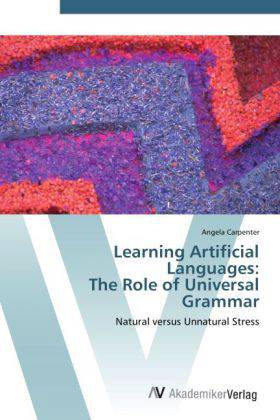
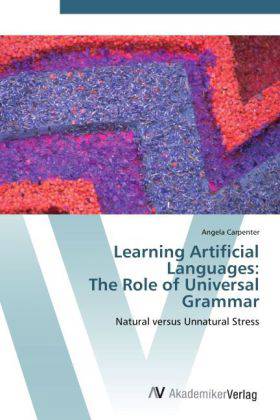
Revision with unchanged content. If Universal Grammar (UG) can aid adult second language acquisition an important question arises: are linguistic principles that are not active in the native language also accessible to second language learners? This question of adult accessibility to UG is addressed by investigating whether a specific phonological principle that does not exist in the subjects' native language is accessible to adult learners. Artificial languages were constructed to compare the acquisition of a stress system that follows a natural phonological principle with one that is almost identical to the same principle, but differs in one feature, thus making it an "unnatural" system. If second language learners have access to innate universal linguistic principles they should be better able to learn the natural rule over the unnatural one. The positive results lend support to the idea of adult second language learners having access to UG. This book should be of interest to educators and researchers in the fields of artificial language learning, second language acquisition and phonological stress or those with a general interest in laboratory phonology.
Specificaties
Betrokkenen
- Auteur(s):
- Uitgeverij:
Inhoud
- Aantal bladzijden:
- 196
- Taal:
- Engels
Eigenschappen
- Productcode (EAN):
- 9783639435092
- Verschijningsdatum:
- 2/07/2012
- Uitvoering:
- Paperback
- Formaat:
- Trade paperback (VS)
- Afmetingen:
- 152 mm x 229 mm
- Gewicht:
- 294 g


Alleen bij Standaard Boekhandel
+ 157 punten op je klantenkaart van Standaard Boekhandel
Wedstrijd


Beoordelingen
We publiceren alleen reviews die voldoen aan de voorwaarden voor reviews. Bekijk onze voorwaarden voor reviews.