


- Afhalen na 1 uur in een winkel met voorraad
- Gratis thuislevering in België vanaf € 30
- Ruim aanbod met 7 miljoen producten
- Afhalen na 1 uur in een winkel met voorraad
- Gratis thuislevering in België vanaf € 30
- Ruim aanbod met 7 miljoen producten





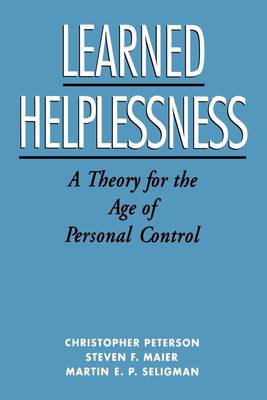
Learned Helplessness
A Theory for the Age of Personal Control
Christopher Peterson, Steven F Maier, Martin E P Seligman
€ 128,95
+ 257 punten
Omschrijving
When experience with uncontrollable events gives rise to the expectation that events in the future will also elude control, disruptions in motivation, emotion, and learning may ensue. "Learned helplessness" refers to the problems that arise in the wake of uncontrollability. First described in the 1960s among laboratory animals, learned helplessness has since been applied to a variety of human problems entailing inappropriate passivity and demoralization. While learned helplessness is best known as an explanation of depression, studies with both people and animals have mapped out the cognitive and biological aspects. The present volume, written by some of the most widely recognized leaders in the field, summarizes and integrates the theory, research, and application of learned helplessness. Each line of work is evaluated critically in terms of what is and is not known, and future directions are sketched. More generally, psychiatrists and psychologists in various specialties will be interested in the book's argument that a theory emphasizing personal control is of particular interest in the here and now, as individuality and control are such salient cultural topics.
Specificaties
Betrokkenen
- Auteur(s):
- Uitgeverij:
Inhoud
- Aantal bladzijden:
- 376
- Taal:
- Engels
- Reeks:
Eigenschappen
- Productcode (EAN):
- 9780195044676
- Verschijningsdatum:
- 5/10/1995
- Uitvoering:
- Paperback
- Formaat:
- Trade paperback (VS)
- Afmetingen:
- 155 mm x 234 mm
- Gewicht:
- 585 g


Alleen bij Standaard Boekhandel
+ 257 punten op je klantenkaart van Standaard Boekhandel
Cadeau

AANGERADEN


Beoordelingen
We publiceren alleen reviews die voldoen aan de voorwaarden voor reviews. Bekijk onze voorwaarden voor reviews.