


- Afhalen na 1 uur in een winkel met voorraad
- Gratis thuislevering in België vanaf € 30
- Ruim aanbod met 7 miljoen producten
- Afhalen na 1 uur in een winkel met voorraad
- Gratis thuislevering in België vanaf € 30
- Ruim aanbod met 7 miljoen producten





€ 36,45
+ 72 punten
Omschrijving
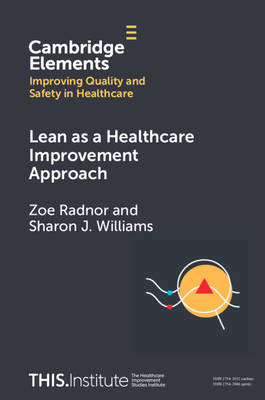
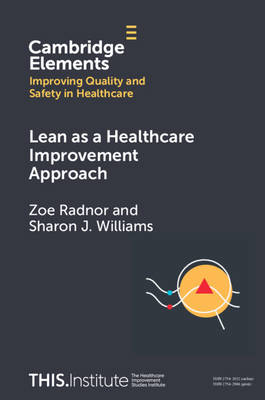
Lean is one of the most widely used improvement approaches in healthcare. With origins in manufacturing, it focuses on improving efficiency, eliminating waste, and streamlining processes. This Element provides an overview of the evidence for the use of Lean in healthcare, summarises the supporting tools and techniques, and emphasises the importance of developing an organisational culture committed to continuous improvement. The authors offer two case studies of attempts to implement Lean at scale, noting that, despite its popularity, implementation is not straightforward. Challenges include terminology that isn't always easy to grasp, perceived dissonances between the manufacturing origins of Lean based on repetitive, standardised, automated production and the human-centred world of healthcare, and problems with fidelity. The authors make the case that there is a lack of a robust evidence base for Lean and call for well-designed studies to advance the implementation of Lean and associated process improvement techniques in healthcare. This title is also available as open access on Cambridge Core.
Specificaties
Betrokkenen
- Auteur(s):
- Uitgeverij:
Inhoud
- Aantal bladzijden:
- 36
- Taal:
- Engels
- Reeks:
Eigenschappen
- Productcode (EAN):
- 9781009326148
- Verschijningsdatum:
- 2/10/2025
- Uitvoering:
- Paperback
- Formaat:
- Trade paperback (VS)
- Afmetingen:
- 152 mm x 229 mm
- Gewicht:
- 63 g


Alleen bij Standaard Boekhandel
+ 72 punten op je klantenkaart van Standaard Boekhandel
Cadeau

AANGERADEN


Beoordelingen
We publiceren alleen reviews die voldoen aan de voorwaarden voor reviews. Bekijk onze voorwaarden voor reviews.