


- Afhalen na 1 uur in een winkel met voorraad
- Gratis thuislevering in België vanaf € 30
- Ruim aanbod met 7 miljoen producten
- Afhalen na 1 uur in een winkel met voorraad
- Gratis thuislevering in België vanaf € 30
- Ruim aanbod met 7 miljoen producten





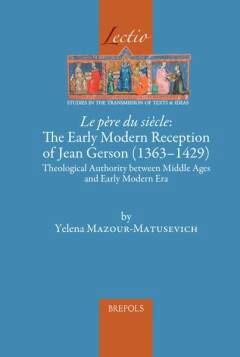
Le Pere Du Siecle
The Early Modern Reception of Jean Gerson (1363-1429): Theological Authority Between Middle Ages and Early Modern Era
Yelena Mazour-Matusevich
€ 116,60
+ 233 punten
Omschrijving
This volume provides the first wide-ranging investigation of the post-fifteenth-century reception of Jean Gerson (1363-1429), chancellor of the University of Paris, guiding light of the Council of Constance, and arguably the most influential of late medieval theologians. His impact on early modern movements and thinkers paved the way for many developments still shaping our existence today. Besides his well-known influence in theology and church history, the chancellor left a significant impact in jurisprudence, human rights, art, music, education, literature, and even medicine; there is hardly an area of the humanities that did not pay at least some tribute to his authority, and there was almost no early modern political or religious movement in the West that neglected his name. Nearly all of the most prominent early modern intellectuals perceived him as an authority and father figure; an illustrious cohort of celebrities, including Thomas More, Martin Luther, King James I, Ignatius of Loyola, Girolamo Savonarola, Christopher Columbus, Bartholomew de Las Casas, and many others, relied on his writings and ideas. The geography of his late-fifteenth- and sixteenth-century reception reflects his pre-eminence, reaching from Spain to Scandinavia.
Specificaties
Betrokkenen
- Auteur(s):
- Uitgeverij:
Inhoud
- Aantal bladzijden:
- 522
- Taal:
- Engels
- Reeks:
- Reeksnummer:
- nr. 14
Eigenschappen
- Productcode (EAN):
- 9782503602257
- Verschijningsdatum:
- 01/06/2023
- Uitvoering:
- Hardcover
- Formaat:
- Genaaid
- Gewicht:
- 426 g


Alleen bij Standaard Boekhandel
+ 233 punten op je klantenkaart van Standaard Boekhandel
Cadeau

AANGERADEN


Beoordelingen
We publiceren alleen reviews die voldoen aan de voorwaarden voor reviews. Bekijk onze voorwaarden voor reviews.