


- Afhalen na 1 uur in een winkel met voorraad
- Gratis thuislevering in België vanaf € 30
- Ruim aanbod met 7 miljoen producten
- Afhalen na 1 uur in een winkel met voorraad
- Gratis thuislevering in België vanaf € 30
- Ruim aanbod met 7 miljoen producten





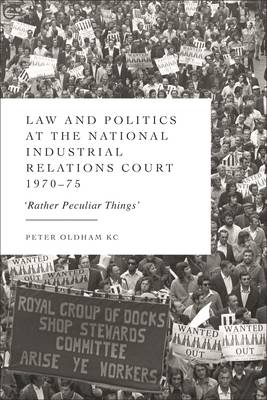
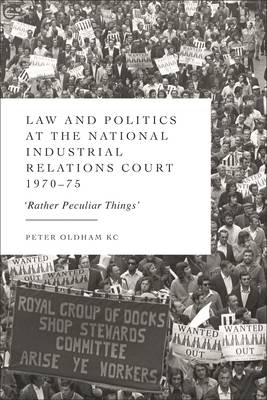
Law and Politics at the National Industrial Relations Court 1970-75
'Rather Peculiar Things'
Peter Oldham
Hardcover | Engels
€ 203,95
+ 407 punten
Omschrijving
This book gives extraordinary new insights into the legal, political and industrial strife in the UK of the early 1970s, focusing on the National Industrial Relations Court and how its independence came to be injured at a time of national crisis.
Constitutional and employment lawyers, and indeed anyone interested in the history of the times, will not want to be without this deeply researched yet entertaining work. When the Heath Government came to power in 1970, it set up the National Industrial Relations Court to referee highly contentious disputes between unions and employers. Regarded with hostility by the labour movement from the start, the Court and its President, Sir John Donaldson, faced mounting suspicion, and were regularly front-page news. When Donaldson jailed five dockers in 1972 - the Pentonville Five - for defying the Court's orders, strikes erupted and the docks closed. With the country's food supplies dwindling, a state of emergency loomed. How had it come to this? Could a way through be found? This is a revelatory account of the National Industrial Relations Court's defining crisis, set in the context of a wider, and frequently startling, exposition of how Donaldson went about his role as its President. Peter Oldham KC combines decades of experience as a barrister with archival research to shine a bright new light on how and why the Court found itself doing - in Donaldson's own words - 'rather peculiar things'.Specificaties
Betrokkenen
- Auteur(s):
- Uitgeverij:
Inhoud
- Aantal bladzijden:
- 208
- Taal:
- Engels
Eigenschappen
- Productcode (EAN):
- 9781509985418
- Verschijningsdatum:
- 30/10/2025
- Uitvoering:
- Hardcover
- Formaat:
- Genaaid
- Afmetingen:
- 156 mm x 234 mm
- Gewicht:
- 467 g


Alleen bij Standaard Boekhandel
+ 407 punten op je klantenkaart van Standaard Boekhandel
Cadeau

AANGERADEN


Beoordelingen
We publiceren alleen reviews die voldoen aan de voorwaarden voor reviews. Bekijk onze voorwaarden voor reviews.