


- Afhalen na 1 uur in een winkel met voorraad
- Gratis thuislevering in België vanaf € 30
- Ruim aanbod met 7 miljoen producten
- Afhalen na 1 uur in een winkel met voorraad
- Gratis thuislevering in België vanaf € 30
- Ruim aanbod met 7 miljoen producten





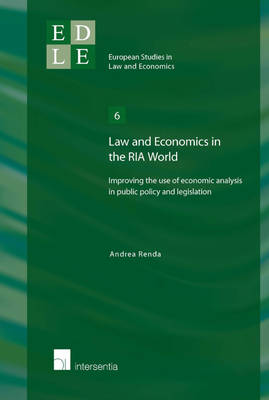
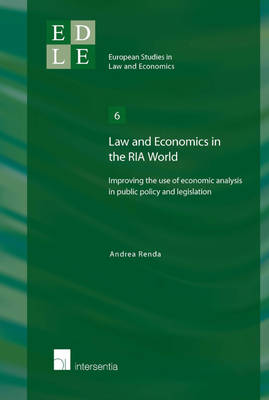
Law and Economics in the RIA World
Improving the Use of Economic Analysis in Public Policy and Legislation Volume 6
Andrea Renda
€ 82,00
+ 164 punten
Omschrijving
The use of economics in public policy, in the form of ex ante Regulatory Impact Analysis (RIA), is strongly advocated by international organizations, such as the Organization for Economic Co-operation and Development and the World Bank. In the US and the EU, hundreds of RIAs are produced every year to justify public intervention in the form of regulation. But, reality shows that, in many other countries, the adoption and implementation of this tool has been patchy at best. At the same time, the use of economics in RIA is heavily challenged by scholarly developments, such as behavioral economics, neuroeconomics, and the study of social norms, and was unable to predict and cure the financial crisis that hit the global economy in 2007. This book claims that RIA should incorporate recent developments from law and economics literature. It provides an analysis of the potential contribution of positive, normative, and functional schools of law and economics to the practice of RIA. The book contains thematic applications to policy fields, such as environmental protection, energy efficiency, financial markets, antitrust, cyberspace, and telecommunications. It provides far-reaching recommendations on the future of law and economics, as well as on the organization of RIA systems around the world, particularly in the US and the EU. (Series: European Studies in Law and Economics - Vol. 6)
Specificaties
Betrokkenen
- Auteur(s):
- Uitgeverij:
Inhoud
- Aantal bladzijden:
- 270
- Taal:
- Engels
- Reeks:
- Reeksnummer:
- nr. 6
Eigenschappen
- Productcode (EAN):
- 9781780680231
- Verschijningsdatum:
- 24/08/2011
- Uitvoering:
- Paperback
- Formaat:
- Trade paperback (VS)
- Afmetingen:
- 160 mm x 240 mm
- Gewicht:
- 453 g


Alleen bij Standaard Boekhandel
+ 164 punten op je klantenkaart van Standaard Boekhandel
Cadeau

AANGERADEN


Beoordelingen
We publiceren alleen reviews die voldoen aan de voorwaarden voor reviews. Bekijk onze voorwaarden voor reviews.