


- Afhalen na 1 uur in een winkel met voorraad
- Gratis thuislevering in België vanaf € 30
- Ruim aanbod met 7 miljoen producten
- Afhalen na 1 uur in een winkel met voorraad
- Gratis thuislevering in België vanaf € 30
- Ruim aanbod met 7 miljoen producten





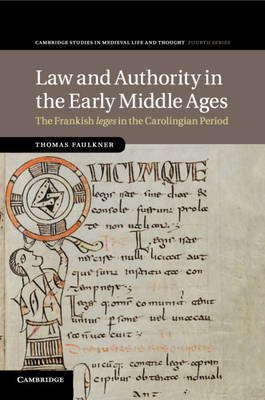
Law and Authority in the Early Middle Ages
The Frankish Leges in the Carolingian Period
Thomas Faulkner
€ 67,95
+ 135 punten
Uitvoering
Omschrijving
The barbarian law codes, compiled between the sixth and eighth centuries, were copied remarkably frequently in the Carolingian ninth century. They provide crucial evidence for early medieval society, including the settlement of disputes, the nature of political authority, literacy, and the construction of ethnic identities. Yet it has proved extremely difficult to establish why the codes were copied in the ninth century, how they were read, and how their rich evidence should be used. Thomas Faulkner tackles these questions more systematically than ever before, proposing new understandings of the relationship between the making of law and royal power, and the reading of law and the maintenance of ethnic identities. Faulkner suggests major reinterpretations of central texts, including the Carolingian law codes, the capitularies adding to the laws, and Carolingian revisions of earlier barbarian and Roman laws. He also provides detailed analysis of legal manuscripts, especially those associated with the leges-scriptorium.
Specificaties
Betrokkenen
- Auteur(s):
- Uitgeverij:
Inhoud
- Aantal bladzijden:
- 316
- Taal:
- Engels
- Reeks:
- Reeksnummer:
- nr. 104
Eigenschappen
- Productcode (EAN):
- 9781107446892
- Verschijningsdatum:
- 2/04/2020
- Uitvoering:
- Paperback
- Formaat:
- Trade paperback (VS)
- Afmetingen:
- 152 mm x 229 mm
- Gewicht:
- 421 g


Alleen bij Standaard Boekhandel
+ 135 punten op je klantenkaart van Standaard Boekhandel
Cadeau

AANGERADEN


Beoordelingen
We publiceren alleen reviews die voldoen aan de voorwaarden voor reviews. Bekijk onze voorwaarden voor reviews.