



Bedankt voor het vertrouwen het afgelopen jaar! Om jou te bedanken bieden we GRATIS verzending (in België) aan op alles gedurende de hele maand januari.
- Afhalen na 1 uur in een winkel met voorraad
- In januari gratis thuislevering in België
- Ruim aanbod met 7 miljoen producten
Bedankt voor het vertrouwen het afgelopen jaar! Om jou te bedanken bieden we GRATIS verzending (in België) aan op alles gedurende de hele maand januari.
- Afhalen na 1 uur in een winkel met voorraad
- In januari gratis thuislevering in België
- Ruim aanbod met 7 miljoen producten





Omschrijving
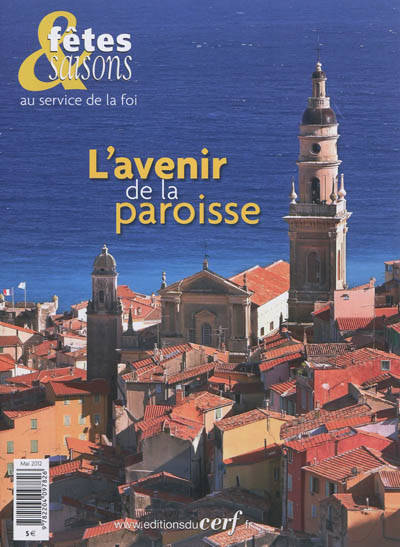
« Que devient la paroisse ? Quel est son avenir ? La paroisse est née et s'est développée dans un régime de chrétienté au point de donner lieu à ce qu'il est convenu d'appeler la civilisation paroissiale". Jusqu'à il y a peu, sous son clocher, les gens naissaient, demeuraient, travaillaient, priaient, festoyaient, et goûtaient au repos éternel. Sous l'autorité du curé, tous partageaient un fort sentiment d'appartenance locale. C'est dans ce cadre que la foi s'est transmise. Depuis le 19e siècle, la paroisse n'a cessé d'être malmenée. L'urbanisation et la technicité de nos sociétés ont contribué à instaurer un autre rapport au temps et à l'espace. L'avènement d'une culture du sujet, un sujet qui construit son identité plus qu'il ne la reçoit (qui, peut-être, voudra choisir sa paroisse) prend l'institution ecclésiale à contre-pied. La foi se privatise, les États modernes se déconfessionnalisent. Aujourd'hui, la paroisse est profondément bouleversée. Le réseau paroissial hérité du passé apparaît par conséquent comme un costume trop large : moins de catholiques se référant à la paroisse de leur résidence et, corrélativement, moins de catholiques participant à la vie et au rayonnement de leur paroisse. À bien des égards, la réalité paroissiale est ainsi devenue le lieu symbolique de bouleversements qui affectent la place et le rôle de l'Église dans nos sociétés. L'Église n'est plus "au milieu du village". [...] Depuis une trentaine d'années, plus de trois quarts des diocèses français ont procédé à un remodelage paroissial, soit en regroupant ou fédérant des paroisses sous la houlette d'un même curé avec des appellations différentes (secteurs pastoraux, communautés de paroisses, unités pastorales, etc.), soit en créant formellement de "nouvelles paroisses", après suppression des anciennes. La réalité paroissiale actuelle est donc "multicampanaire" elle intègre plusieurs clochers sous lesquels sont assurés collectivement les fonctions et services de l'institution paroissiale. [...] Ce dossier ne prétend pas épuiser un si vaste sujet. Il offre d'abord un éclairage historique puis des éléments de réflexion qui permettent aux lecteurs d'affronter avec un certain recul leur propre réalité paroissiale et de se poser avec audace et sérénité la question de l'avenir dans un monde sécularisé et une société multireligieuse. » [Alphonse Borras]
--
‘What is becoming of the parish? What is its future? The parish was born and developed in a Christian regime to the point of producing what is commonly called the "parish civilisation". Until a short time ago, people were born, lived, worked, prayed, celebrated and enjoyed eternal rest under its steeple. Under the authority of a priest, people felt a strong awareness of local belonging. It was in this framework that faith was transmitted. Since the 19th century, the parish has been in constant decline. Urbanisation and the technical aspect of our society have contributed to create a different relation with time and space. A culture of the subject has emerged, a subject whose identity is built more than received (and who, perhaps, would prefer to choose his parish). The ecclesial institution was ill-prepared for this change. Faith has become a private affair, fewer modern States are confessional. Today, the parish is deeply altered. ‘The parish network inherited from the past consequently appears to be too big: fewer Catholics refer to the parish of their residence and, correspondingly, fewer Catholics participate in the life and the well-being of their parish. In many ways, the parish has become a symbol of all the upsets that affect the role of the Church in our societies. The Church is no longer "in the centre of the village" [...] ‘For the last thirty years, more than three-quarters of the dioceses in France have re-organized their parishes, either by regrouping or federating them under the same priest with different names (pastoral sectors, parish communities, pastoral unities, etc.), or by formally creating "new parishes" after dissolving the old ones. In reality, this means integrating several churches and congregations whose functions and services are provided by a collective parish institution. [...] ‘This dossier does not claim to give an exhaustive account of the subject. Firstly, it offers a historical view then some elements for reflection which will help readers view their own pastoral reality from a certain distance and reflect, with boldness and serenity, on the future of the parish in a secularised world and a multi-religious society.' [Alphonse Borras]"
--
‘What is becoming of the parish? What is its future? The parish was born and developed in a Christian regime to the point of producing what is commonly called the "parish civilisation". Until a short time ago, people were born, lived, worked, prayed, celebrated and enjoyed eternal rest under its steeple. Under the authority of a priest, people felt a strong awareness of local belonging. It was in this framework that faith was transmitted. Since the 19th century, the parish has been in constant decline. Urbanisation and the technical aspect of our society have contributed to create a different relation with time and space. A culture of the subject has emerged, a subject whose identity is built more than received (and who, perhaps, would prefer to choose his parish). The ecclesial institution was ill-prepared for this change. Faith has become a private affair, fewer modern States are confessional. Today, the parish is deeply altered. ‘The parish network inherited from the past consequently appears to be too big: fewer Catholics refer to the parish of their residence and, correspondingly, fewer Catholics participate in the life and the well-being of their parish. In many ways, the parish has become a symbol of all the upsets that affect the role of the Church in our societies. The Church is no longer "in the centre of the village" [...] ‘For the last thirty years, more than three-quarters of the dioceses in France have re-organized their parishes, either by regrouping or federating them under the same priest with different names (pastoral sectors, parish communities, pastoral unities, etc.), or by formally creating "new parishes" after dissolving the old ones. In reality, this means integrating several churches and congregations whose functions and services are provided by a collective parish institution. [...] ‘This dossier does not claim to give an exhaustive account of the subject. Firstly, it offers a historical view then some elements for reflection which will help readers view their own pastoral reality from a certain distance and reflect, with boldness and serenity, on the future of the parish in a secularised world and a multi-religious society.' [Alphonse Borras]"
Specificaties
Betrokkenen
- Auteur(s):
- Uitgeverij:
Inhoud
- Aantal bladzijden:
- 35
- Taal:
- Frans
Eigenschappen
- Productcode (EAN):
- 9782204097826
- Verschijningsdatum:
- 14/06/2012
- Uitvoering:
- Paperback
- Afmetingen:
- 210 mm x 290 mm
- Gewicht:
- 118 g


Alleen bij Standaard Boekhandel
+ 10 punten op je klantenkaart van Standaard Boekhandel
SOLDEN


Beoordelingen
We publiceren alleen reviews die voldoen aan de voorwaarden voor reviews. Bekijk onze voorwaarden voor reviews.