


- Afhalen na 1 uur in een winkel met voorraad
- Gratis thuislevering in België vanaf € 30
- Ruim aanbod met 7 miljoen producten
- Afhalen na 1 uur in een winkel met voorraad
- Gratis thuislevering in België vanaf € 30
- Ruim aanbod met 7 miljoen producten





€ 358,95
+ 717 punten
Omschrijving
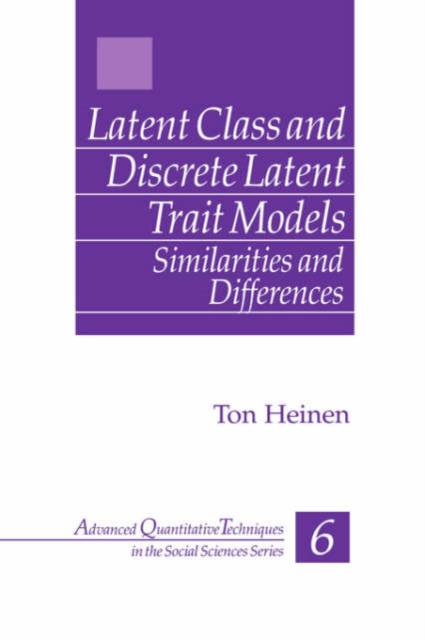
The standard latent class model. It has been popular among social scientists as an instrument for data reduction, as a flexible tool for analyzing structural relationships between categorical variables, and as a natural extension of the log-linear model in order to take measurement error into account. What, however, are the similarities and differences between the latent class model and latent trait models? Through a careful examination of these issues, author Ton Heinen explores such topics as how to estimate the parameters of latent class analysis models as well as the methods for model selection and ways to examine the correspondence between discrete latent trait models and certain restricted latent class models. In addition, he reviews log-linear models, latent trait models, and a number of restricted latent class models in detail as well as for the estimation of parameters for these models. Readers who would like to see how the estimation of the parameters in latent trait models plays a role in the correspondence between latent class and latent trait models will find Latent Class and Discrete Latent Trait Models a fascinating read.
Specificaties
Betrokkenen
- Auteur(s):
- Uitgeverij:
Inhoud
- Aantal bladzijden:
- 224
- Taal:
- Engels
- Reeks:
- Reeksnummer:
- nr. 6
Eigenschappen
- Productcode (EAN):
- 9780803974333
- Verschijningsdatum:
- 24/04/1996
- Uitvoering:
- Hardcover
- Formaat:
- Genaaid
- Afmetingen:
- 160 mm x 237 mm
- Gewicht:
- 544 g


Alleen bij Standaard Boekhandel
+ 717 punten op je klantenkaart van Standaard Boekhandel
Cadeau

AANGERADEN


Beoordelingen
We publiceren alleen reviews die voldoen aan de voorwaarden voor reviews. Bekijk onze voorwaarden voor reviews.