



Je cadeautjes zeker op tijd in huis hebben voor de feestdagen? Kom langs in onze winkels en vind het perfecte geschenk!
- Afhalen na 1 uur in een winkel met voorraad
- Gratis thuislevering in België vanaf € 30
- Ruim aanbod met 7 miljoen producten
Je cadeautjes zeker op tijd in huis hebben voor de feestdagen? Kom langs in onze winkels en vind het perfecte geschenk!
- Afhalen na 1 uur in een winkel met voorraad
- Gratis thuislevering in België vanaf € 30
- Ruim aanbod met 7 miljoen producten





Omschrijving
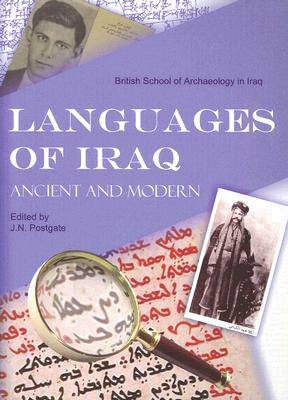
For all five thousand years of its history Iraq has been home to a mixture of languages, spoken and written, and the same is true today. In November 2003, to celebrate the country's rich diversity and long history as a centre of civilisation the British School presented a series of talks by experts on each of the major languages of Iraq and their history, and this illustrated volume brings these now to a wider public. Iraq's languages come from different linguistic families - Semitic, Indo-European, and agglutinative languages like Sumerian, Hurrian and Turkish. Some, although long dead, have a prime place in the history of the Old World: Sumerian, probably the first language to be written and the vehicle of cuneiform scholarship for more than two millennia, and Akkadian, the language of Hammurapi and the Epic of Gilgamesh, and used across the Near East for administration and diplomacy. The history of Aramaic is even longer, stretching back to overlap with Akkadian before 1000 BC. It survives, precariously, in both written and spoken forms, being one of four languages spoken in Iraq today. Of these Arabic as a major world language has often been described, but here we have an account of the vernacular Iraqi Arabic dialects, and the descriptions of Iraqi Kurdish and Turkman are unique, detailed and authoritative.
Specificaties
Betrokkenen
- Auteur(s):
- Uitgeverij:
Inhoud
- Aantal bladzijden:
- 187
- Taal:
- Engels
Eigenschappen
- Productcode (EAN):
- 9780903472210
- Verschijningsdatum:
- 15/08/2007
- Uitvoering:
- Paperback
- Formaat:
- Trade paperback (VS)
- Afmetingen:
- 163 mm x 220 mm
- Gewicht:
- 489 g


Alleen bij Standaard Boekhandel
+ 130 punten op je klantenkaart van Standaard Boekhandel
CADEAU


Beoordelingen
We publiceren alleen reviews die voldoen aan de voorwaarden voor reviews. Bekijk onze voorwaarden voor reviews.