


- Afhalen na 1 uur in een winkel met voorraad
- Gratis thuislevering in België vanaf € 30
- Ruim aanbod met 7 miljoen producten
- Afhalen na 1 uur in een winkel met voorraad
- Gratis thuislevering in België vanaf € 30
- Ruim aanbod met 7 miljoen producten





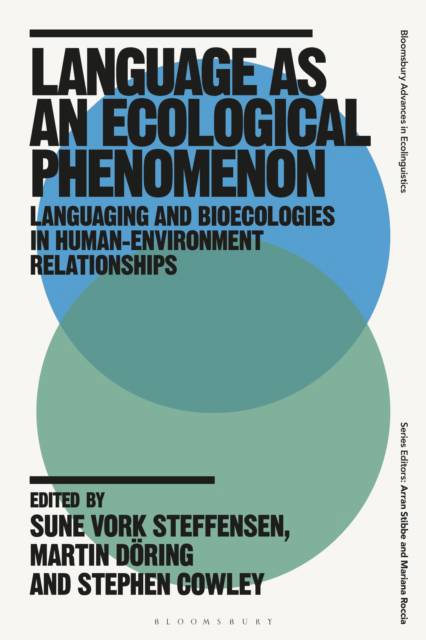
Language as an Ecological Phenomenon
Languaging and Bioecologies in Human-Environment Relationships
€ 67,95
+ 135 punten
Eenvoudig bestellen
Veilig betalen


Gratis thuislevering vanaf € 30 (via bpost)
Gratis levering in je Standaard Boekhandel
Omschrijving
Moving beyond a more traditional view of language as a discrete sociocultural and cognitive entity that distorts our understanding of surrounding ecologies, this book argues that the starting point for ecolinguistics is an appreciation of language as not just about nature, but of nature.
Exploring this conceptual change in the field, the book presents a process view in which language is substituted by languaging, emphasising the bioecologies that we cohabit with numerous other species. It puts forward this perspective by looking at the theoretical considerations behind the understanding of languaging as bioecological, and through examining languaging in various contexts and places. Drawing on examples from across the world, it addresses topics such as climate catastrophes, corporate narratives, questions of ecological leadership, the bioecological implications of the COVID pandemic, and relational landscapes. It also makes use of data from across multiple bioecological settings, including the dairy and agricultural industries.Specificaties
Betrokkenen
- Uitgeverij:
Inhoud
- Aantal bladzijden:
- 260
- Taal:
- Engels
- Reeks:
Eigenschappen
- Productcode (EAN):
- 9781350304529
- Verschijningsdatum:
- 22/01/2026
- Uitvoering:
- Paperback
- Formaat:
- Trade paperback (VS)
- Afmetingen:
- 156 mm x 234 mm
- Gewicht:
- 385 g

Alleen bij Standaard Boekhandel
+ 135 punten op je klantenkaart van Standaard Boekhandel
CADEAU

AANGERADEN


Beoordelingen
We publiceren alleen reviews die voldoen aan de voorwaarden voor reviews. Bekijk onze voorwaarden voor reviews.