


- Afhalen na 1 uur in een winkel met voorraad
- Gratis thuislevering in België vanaf € 30
- Ruim aanbod met 7 miljoen producten
- Afhalen na 1 uur in een winkel met voorraad
- Gratis thuislevering in België vanaf € 30
- Ruim aanbod met 7 miljoen producten





€ 139,95
+ 279 punten
Omschrijving
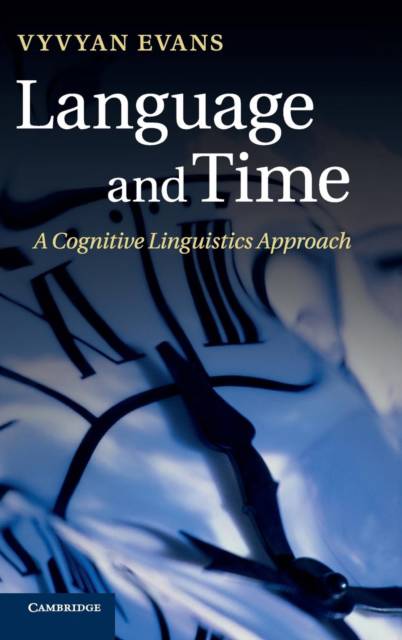
Using language and thought to fix events in time is one of the most complex computational feats that humans perform. In the first book-length taxonomy of temporal frames of reference, Vyvyan Evans provides an overview of the role of space in structuring human representations of time. Challenging the assumption that time is straightforwardly structured in terms of space, he shows that while space is important for temporal representation, time is nevertheless separate and distinguishable from it. Evans argues for three distinct temporal frames of reference in language and cognition and evaluates the nature of temporal reference from a cross-linguistic perspective. His central thesis is that the hallmark of temporal reference is transience, a property unique to the domain of time. This important study has implications not only for the relationship between space and time, but also for that between language and figurative thought, and the nature of linguistically-mediated meaning construction.
Specificaties
Betrokkenen
- Auteur(s):
- Uitgeverij:
Inhoud
- Aantal bladzijden:
- 286
- Taal:
- Engels
Eigenschappen
- Productcode (EAN):
- 9781107043800
- Verschijningsdatum:
- 3/10/2013
- Uitvoering:
- Hardcover
- Formaat:
- Genaaid
- Afmetingen:
- 155 mm x 226 mm
- Gewicht:
- 521 g


Alleen bij Standaard Boekhandel
+ 279 punten op je klantenkaart van Standaard Boekhandel
Cadeau

AANGERADEN


Beoordelingen
We publiceren alleen reviews die voldoen aan de voorwaarden voor reviews. Bekijk onze voorwaarden voor reviews.