


- Afhalen na 1 uur in een winkel met voorraad
- Gratis thuislevering in België vanaf € 30
- Ruim aanbod met 7 miljoen producten
- Afhalen na 1 uur in een winkel met voorraad
- Gratis thuislevering in België vanaf € 30
- Ruim aanbod met 7 miljoen producten




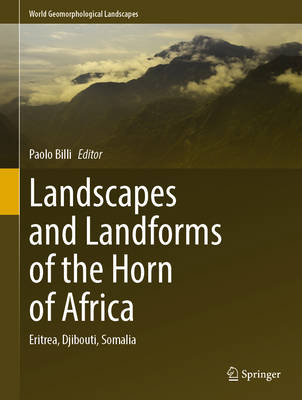
Landscapes and Landforms of the Horn of Africa
Eritrea, Djibouti, Somalia
€ 160,45
+ 320 punten
Omschrijving
This book focuses on regions for which until now the geomorphology was very poorly studied and relatively unknown. Nevertheless, the landforms and landscapes of the Horn of Africa are highly attractive, diverse and in a few cases unique, since they span very different environments, from highland plateaus and mountains to lowlands (even below sea level) and coastlines with a high degree of diversity and from monsoon to arid climate conditions.
The main topics addressed in the book include the links between the geological evolution and the current large scale geomorphology of the Horn of Africa; the large differences between the highlands and lowlands climate, river hydrology and their variation through time within a climate change perspective. This part of the world was home of the very first hominids. The landscape in which they lived and evolved throughout the Pleistocene is described in comparison with the arid and inhospitable, though immensely scenic, environment of today.
Perennial and ephemeral rivers with very different morphology, processes, and hydrology drain the area, and, in combination with the past and recent uplift, substantially contributed to provide the region with peculiar landscapes and landforms. Long lasting weathering and erosion processes result in a typical inselberg landscape such as the Bur region, or the currently exposed flatland of old peneplain surfaces. Their changes through time, induced by both natural and anthropogenic factors, are addressed by a couple of case studies. Though the region has few inhabitants, they had to struggle to find their livelihood in a land that offers poor resources. This resulted in landscape change and land degradation. Examples of human impact on the landscape are presented at different scales.
This book provides readers interested in geography and geomorphology with essential scientific and educational information on the Landscapes and Landforms of Eritrea, Djibouti and Somalia through simple, though scientifically, rigorous texts illustrated with several color maps and photos. One main prerogative of this book is therefore to give an insight into a region of the world where, for geographical and historical constraints, geomorphological investigation was very limited, thus enriching its intrinsic informative value.
The main topics addressed in the book include the links between the geological evolution and the current large scale geomorphology of the Horn of Africa; the large differences between the highlands and lowlands climate, river hydrology and their variation through time within a climate change perspective. This part of the world was home of the very first hominids. The landscape in which they lived and evolved throughout the Pleistocene is described in comparison with the arid and inhospitable, though immensely scenic, environment of today.
Perennial and ephemeral rivers with very different morphology, processes, and hydrology drain the area, and, in combination with the past and recent uplift, substantially contributed to provide the region with peculiar landscapes and landforms. Long lasting weathering and erosion processes result in a typical inselberg landscape such as the Bur region, or the currently exposed flatland of old peneplain surfaces. Their changes through time, induced by both natural and anthropogenic factors, are addressed by a couple of case studies. Though the region has few inhabitants, they had to struggle to find their livelihood in a land that offers poor resources. This resulted in landscape change and land degradation. Examples of human impact on the landscape are presented at different scales.
This book provides readers interested in geography and geomorphology with essential scientific and educational information on the Landscapes and Landforms of Eritrea, Djibouti and Somalia through simple, though scientifically, rigorous texts illustrated with several color maps and photos. One main prerogative of this book is therefore to give an insight into a region of the world where, for geographical and historical constraints, geomorphological investigation was very limited, thus enriching its intrinsic informative value.
Specificaties
Betrokkenen
- Uitgeverij:
Inhoud
- Aantal bladzijden:
- 403
- Taal:
- Engels
- Reeks:
Eigenschappen
- Productcode (EAN):
- 9783031054860
- Verschijningsdatum:
- 1/10/2022
- Uitvoering:
- Hardcover
- Formaat:
- Genaaid
- Afmetingen:
- 211 mm x 282 mm
- Gewicht:
- 1338 g

Alleen bij Standaard Boekhandel
+ 320 punten op je klantenkaart van Standaard Boekhandel
AANGERADEN


Beoordelingen
We publiceren alleen reviews die voldoen aan de voorwaarden voor reviews. Bekijk onze voorwaarden voor reviews.