


- Afhalen na 1 uur in een winkel met voorraad
- Gratis thuislevering in België vanaf € 30
- Ruim aanbod met 7 miljoen producten
- Afhalen na 1 uur in een winkel met voorraad
- Gratis thuislevering in België vanaf € 30
- Ruim aanbod met 7 miljoen producten





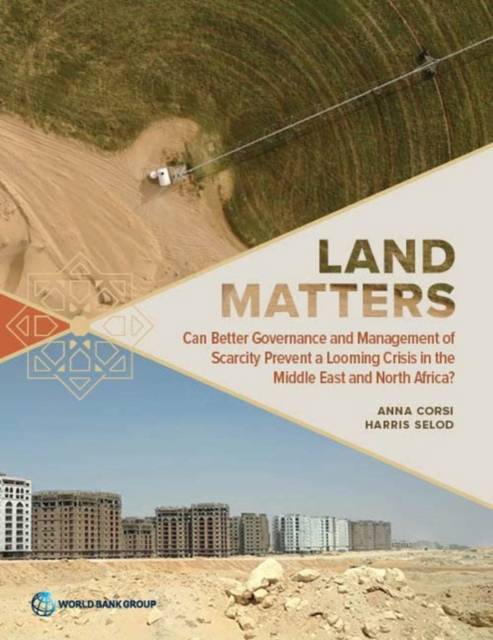
Land Matters
Can Better Governance and Management of Scarcity Prevent a Looming Crisis in the Middle East and North Africa?
Anna Corsi, Harris Selod
Paperback | Engels
€ 71,95
+ 143 punten
Omschrijving
Across the Middle East and North Africa (MENA), land is scarce and valuable. Demand for land is projected to dramatically increase to meet the needs of a fast-growing urban population. At the same time, the supply of land is restricted by weak governance and climate factors, causing the quasi-exhaustion of cultivable land reserves. As a result, a crisis is looming. Yet, land continues to be used inefficiently, inequitably, and unsustainably. 'Land Matters' identifies and analyzes the economic, environmental, and social challenges associated with land in the MENA region, shedding light on policy options and proposing paths to reform. It concludes that MENA countries need to act promptly, think more holistically about land, reassess the strategic trade-offs, and minimize land distortions. This report promotes a culture of open data, transparency, and inclusive dialogue on land, while filling major data gaps. These important steps will contribute to renewing the social contract, transforming the region economically and digitally, improving women's land rights, and facilitating recovery and reconstruction in a context of dramatic social, political, and climatic transformation.
Specificaties
Betrokkenen
- Auteur(s):
- Uitgeverij:
Inhoud
- Aantal bladzijden:
- 128
- Taal:
- Engels
Eigenschappen
- Productcode (EAN):
- 9781464816611
- Verschijningsdatum:
- 16/02/2023
- Uitvoering:
- Paperback
- Formaat:
- Trade paperback (VS)
- Afmetingen:
- 203 mm x 267 mm
- Gewicht:
- 385 g


Alleen bij Standaard Boekhandel
+ 143 punten op je klantenkaart van Standaard Boekhandel
Cadeau

AANGERADEN


Beoordelingen
We publiceren alleen reviews die voldoen aan de voorwaarden voor reviews. Bekijk onze voorwaarden voor reviews.