


- Afhalen na 1 uur in een winkel met voorraad
- Gratis thuislevering in België vanaf € 30
- Ruim aanbod met 7 miljoen producten
- Afhalen na 1 uur in een winkel met voorraad
- Gratis thuislevering in België vanaf € 30
- Ruim aanbod met 7 miljoen producten





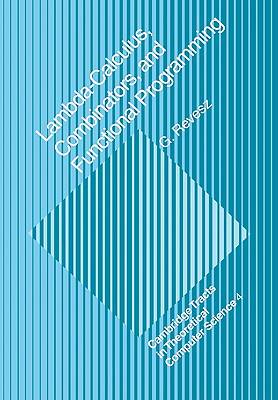
Lambda-Calculus, Combinators and Functional Programming
G E Revesz
€ 74,45
+ 148 punten
Omschrijving
Originally published in 1988, this book presents an introduction to lambda-calculus and combinators without getting lost in the details of mathematical aspects of their theory. Lambda-calculus is treated here as a functional language and its relevance to computer science is clearly demonstrated. The main purpose of the book is to provide computer science students and researchers with a firm background in lambda-calculus and combinators and show the applicabillity of these theories to functional programming. The presentation of the material is self-contained. It can be used as a primary text for a course on functional programming. It can also be used as a supplementary text for courses on the structure and implementation of programming languages, theory of computing, or semantics of programming languages.
Specificaties
Betrokkenen
- Auteur(s):
- Uitgeverij:
Inhoud
- Aantal bladzijden:
- 192
- Taal:
- Engels
- Reeks:
- Reeksnummer:
- nr. 4
Eigenschappen
- Productcode (EAN):
- 9780521114295
- Verschijningsdatum:
- 25/06/2009
- Uitvoering:
- Paperback
- Formaat:
- Trade paperback (VS)
- Afmetingen:
- 170 mm x 244 mm
- Gewicht:
- 312 g


Alleen bij Standaard Boekhandel
+ 148 punten op je klantenkaart van Standaard Boekhandel
Cadeau

AANGERADEN


Beoordelingen
We publiceren alleen reviews die voldoen aan de voorwaarden voor reviews. Bekijk onze voorwaarden voor reviews.