


- Afhalen na 1 uur in een winkel met voorraad
- Gratis thuislevering in België vanaf € 30
- Ruim aanbod met 7 miljoen producten
- Afhalen na 1 uur in een winkel met voorraad
- Gratis thuislevering in België vanaf € 30
- Ruim aanbod met 7 miljoen producten





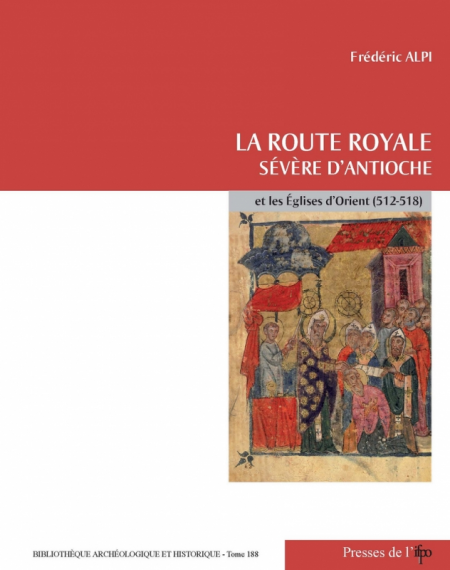
La route royale E-BOOK
Sévère d'Antioche et les Eglises d'Orient (512-518)
Frédéric Alpi
E-book | Frans
€ 9,99
+ 9 punten
Omschrijving
Présentation
Fort de la confiance d’Anastase Ier, le moine Sévère, brillant polémiste antichalcédonien et cyrillien de stricte observance, devient patriarche d’Antioche en 512 et se maintient sur ce siège apostolique jusqu’à la mort de l’empereur (518). Dans le cadre formel de l’Hénotique, il entend faire prévaloir son hostilité au dogme des deux natures du Christ, ralliant autour de lui l’ensemble des évêques orientaux, en accord doctrinal avec les patriarches d’Alexandrie et de Constantinople. La constitution de cette « communion sévérienne » nous renseigne sur le fonctionnement institutionnel du patriarcat d’Antioche au début du VIe siècle, sur les principaux organes de son gouvernement, et sur la condition juridique et sociale des clercs et des moines. Parallèlement, les homélies cathédrales de Sévère documentent la liturgie alors en usage à Antioche et son évolution, la topographie religieuse de la ville, ainsi que la société urbaine et sa vie quotidienne, montrant d’ailleurs les limites spirituelles et morales qu’y rencontre encore la prédication chrétienne. Il en va de même pour le diocèse oriental dans son ensemble, où la correspondance du patriarche et diverses sources parallèles font état de résistances païennes, d’évangélisation toujours nécessaire, de dissidences religieuses, notamment juive et manichéenne, et d’oppositions dogmatiques bien localisées. Parfois violentes, ces dernières annoncent d’ailleurs le renversement politique qui sera concrétisé par l’avènement de Justin Ier, la chute de Sévère et la fin de l’Hénotique.
Armed with the trust of Anastasius I, Severus the monk, a brilliant anti-Chalcedonian and Cyrillian polemicist of strict observance, became Patriarch of Antioch in 512, and remained in this apostolic seat until the death of the emperor (518). Within the formal context of the Henoticon, he intended to ensure hostility to the dogma of the tow natures of Christ, by rallying all the Eastern bishops around himself, in accord with the Patriarchs of Alexandria and Constantinople. The constitution of this «Severan communion» gives us information on the institutional functioning of the Patriarchate of Antioch at the beginning of the 6th century, on the principal organs of its goverment, and on the juridical and social condition of prelates and monks. At the same time, Severus’ cathedral homilies document the liturgy in use at Antioch, as well as its evolution, the religious topography of the city, and urban society and its daily life; this, moreover, gives us a glimpse of the spiritual and moral limits that Christianity still encountered there. The same holds true for the entire Oriental diocese, where the Patriarch’s correspondance and various parallel sources attest pagan resistances, the continuing need for evangelization, religious dissidence — in particular, Jewish and Manichaean — and highly localized dogmatic oppositions. Sometimes violent, these announce the political reversal that was to be concretized by the coming to power of Justin I, the fall of Severus, and the fall of the Henoticon.
Sommaire Liminaire : La vie de Sévère d'Antioche Première partie : Les institutions du patriarcat sévérien I. Le siège d'Antioche II. Le clergé et les moines III. L’Église d'Antioche dans l'Empire : Sévère et les autorités séculières Deuxième partie : L'évèque en sa ville I. Le temps chrétien : encadrement liturgique du peuple d'Antioche II. L’espace chrétien : éléments de topographie religieuse antiochienne III. Un projet chrétien pour le peuple d'Antioche : la pastorale de Sévère IV. Réalités sociales : les limites de la cité chrétienne Troisième partie : Le Patriarche d'Orient I. L’autorité d'Antioche II. Les événements III. La christianisation du diocèse oriental Quatrième partie : Oppositions et dissidences I. Les Juifs II. Les Manichéens III. Chrétiens déviants et adversaires christologiques Conclusion généraleSpecificaties
Betrokkenen
- Auteur(s):
- Uitgeverij:
Inhoud
- Aantal bladzijden:
- 540
- Taal:
- Frans
Eigenschappen
- Productcode (EAN):
- 9782351591543
- Verschijningsdatum:
- 23/10/2009
- Uitvoering:
- E-book
- Beveiligd met:
- Adobe DRM
- Afmetingen:
- 230 mm x 280 mm
- Gewicht:
- 2400 g


Alleen bij Standaard Boekhandel
+ 9 punten op je klantenkaart van Standaard Boekhandel
Cadeau

AANGERADEN


Beoordelingen
We publiceren alleen reviews die voldoen aan de voorwaarden voor reviews. Bekijk onze voorwaarden voor reviews.