


- Afhalen na 1 uur in een winkel met voorraad
- Gratis thuislevering in België vanaf € 30
- Ruim aanbod met 7 miljoen producten
- Afhalen na 1 uur in een winkel met voorraad
- Gratis thuislevering in België vanaf € 30
- Ruim aanbod met 7 miljoen producten





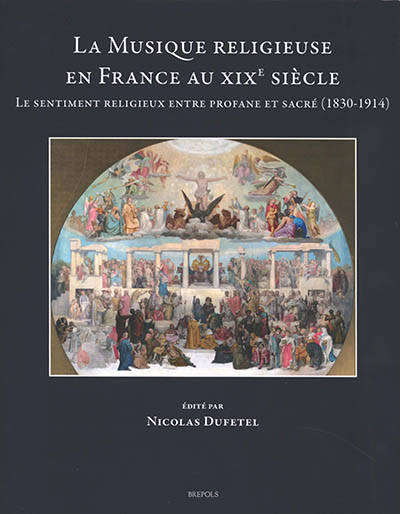
La Musique Religieuse En France Au XIXe Siecle
Nicolas Dufetel
€ 159,00
+ 318 punten
Omschrijving
This volume investigates religious music in France during the 19th century, after the disruption of the French Revolution and the Concordat (1801), until a few years after the Law of Separation of Churches and State (1905). With its various and complicated forms--choral, instrumental, orchestral, etc.- and aesthetic concepts, 19th-century French religious music echoes the many facets of religious life in France, dominated by the Catholic faith, but diversified into many neo-Catholic systems (saint-simonism, humanitarianism, ultramontanism, etc.). Religious music interacts with society, moral philosophy, aesthetics, and politics. Thinkers such as Lamennais, Lacordaire, Montalembert, Dom Gueranger, and Renan, who had a deep influence on their contemporaries, were influential on musicians. The ideas of music writers such as Fetis, d'Ortigue, Felix Clement are also studied. The texts in this volume explore the relation between music and worship, the liturgical movements and reforms, and the adoption of the Roman rite. Of particular interest is the research on plain-chant and its role in liturgy and musical compositions, as well as its intersections with politics. Case studies (Berlioz, Gounod, Liszt, Saint-Saens, Massenet, d'Indy, Faure) illustrate these questions. Finally, several texts investigate the presence of religious elements in cabaret, and the educational or secular repertoire. According to D'Ortigue, If one bases one's thoughts on what we call 'religious sentiment', there are no more rules, no more limits. Religious sentiment allows a global view of secular and sacred conceptions, and explains the great musical variety in a period divided between tradition, science and faith.
Specificaties
Betrokkenen
- Auteur(s):
- Uitgeverij:
Inhoud
- Aantal bladzijden:
- 300
- Taal:
- Engels, Frans
- Reeks:
- Reeksnummer:
- nr. 44
Eigenschappen
- Productcode (EAN):
- 9782503597775
- Verschijningsdatum:
- 31/12/2021
- Uitvoering:
- Hardcover
- Formaat:
- Genaaid
- Afmetingen:
- 220 mm x 270 mm
- Gewicht:
- 5388 g


Alleen bij Standaard Boekhandel
+ 318 punten op je klantenkaart van Standaard Boekhandel
Cadeau

AANGERADEN


Beoordelingen
We publiceren alleen reviews die voldoen aan de voorwaarden voor reviews. Bekijk onze voorwaarden voor reviews.