


- Afhalen na 1 uur in een winkel met voorraad
- Gratis thuislevering in België vanaf € 30
- Ruim aanbod met 7 miljoen producten
- Afhalen na 1 uur in een winkel met voorraad
- Gratis thuislevering in België vanaf € 30
- Ruim aanbod met 7 miljoen producten





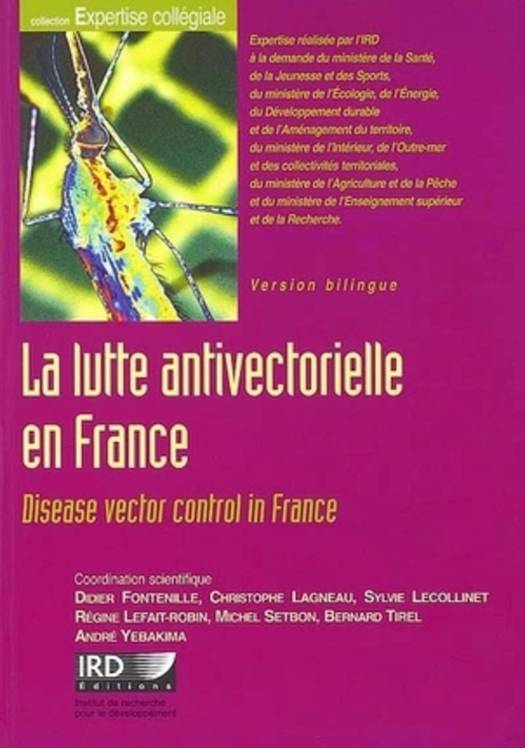
La lutte antivectorielle en France
Didier Fontenille, Christophe Lagneau, Sylvie Lecollinet, Régine Lefait-Robin, Michel Setbon, Bernard Tirel, André Yebakima
Paperback | Frans
€ 15,30
+ 30 punten
Uitvoering
Omschrijving
Chikungunya, dengue, fièvre catarrhale ovine... La forte recrudescence au cours de ces dernières années de maladies transmises par des insectes vecteurs constitue aujourd'hui une préoccupation majeure de santé publique, dans ses composantes humaine et animale. La "lutte antivectorielle" a pour objectifs de minimiser les risques d'endémisation ou d'épidémisation, de diminuer la transmission d'agents pathogènes par des vecteurs et de gérer les épidémies dans un cadre stratégique formalisé.
Cinq ministères français ont demandé en 2008 à l'Institut de recherche pour le développement (IRD) de produire un état des lieux complet et une analyse pluridisciplinaire des dispositifs de lutte antivectorielle en métropole et dans les régions ultra-marines. Le cadre de la gouvernance et la répartition des compétences, les conditions générales de mise en oeuvre de la lutte antivectorielle, les pratiques et modalités d'évaluation de la lutte, les outils et leviers d'anticipation ont ainsi été examinés par un collège d'experts qui en restitue ici le bilan détaillé.
Au-delà, cette expertise collégiale met en lumière les évolutions indispensables que doit connaître ce domaine sensible et livre des recommandations en vue d'une refondation des politiques de lutte. Les défis à relever et les stratégies à concevoir pour le contrôle des risques sont d'autant plus complexes que les changements globaux (climatiques, environnementaux, sociétaux) influencent considérablement les systèmes vectoriels.
Chikungunya, dengue, bluetongue disease and others The strong resurgence of insect-vector transmitted diseases over recent years has become a major public health concern, in both human and veterinary spheres. Vector control has the objective of bringing down to a minimum the risks of endemization or epidemization, reducing pathogen transmission by vectors and managing epidemics in a clearly formulated strategic framework.
In 2008 five French ministries commissioned the Institut de recherche pour le développement (IRD) to produce a comprehensive state-of-the art report and multidisciplinary analysis of vector control systems in metropolitan France and the country's overseas regions. An expert group examined the framework for governance and the attribution of responsibilities, the general conditions for vector control implementation, the practices and methods of vector control assessment and the tools and means for forecasting risks. It presents the detailed account of its findings in this report.
Going beyond the analysis, this expert survey highlights the essential changes and developments that should be brought to this sensitive field and sets out recommendations for a revision of control policies. Challenges will have to be taken up and strategies will have to be devised to control risks. And these are becoming more complex with ongoing global-scale changes (to climate, environment and societies) that strongly influence vector systems.
Bilingue français-anglais
Specificaties
Betrokkenen
- Auteur(s):
- Uitgeverij:
Inhoud
- Aantal bladzijden:
- 534
- Taal:
- Frans
Eigenschappen
- Productcode (EAN):
- 9782709916677
- Verschijningsdatum:
- 3/05/2011
- Uitvoering:
- Paperback
- Afmetingen:
- 153 mm x 212 mm
- Gewicht:
- 710 g



Alleen bij Standaard Boekhandel
+ 30 punten op je klantenkaart van Standaard Boekhandel
Cadeau

AANGERADEN


Beoordelingen
We publiceren alleen reviews die voldoen aan de voorwaarden voor reviews. Bekijk onze voorwaarden voor reviews.