


- Afhalen na 1 uur in een winkel met voorraad
- Gratis thuislevering in België vanaf € 30
- Ruim aanbod met 7 miljoen producten
- Afhalen na 1 uur in een winkel met voorraad
- Gratis thuislevering in België vanaf € 30
- Ruim aanbod met 7 miljoen producten





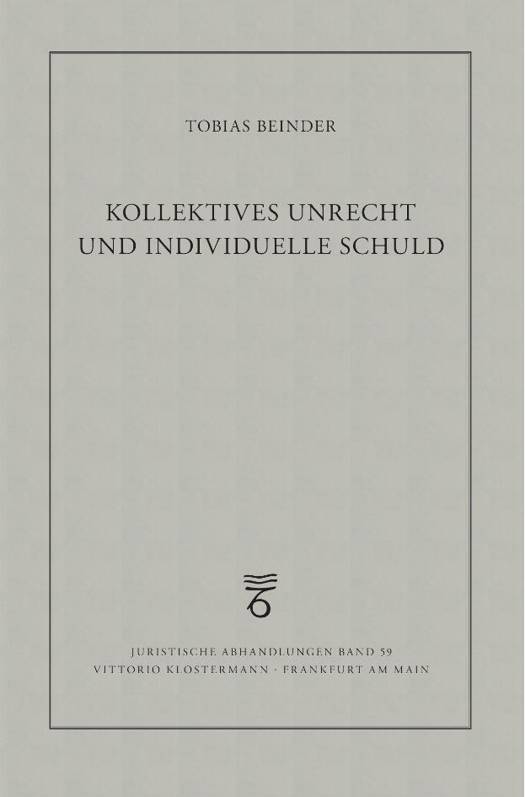
Kollektives Unrecht und individuelle Schuld
Tobias Beinder
€ 90,45
+ 180 punten
Omschrijving
Im Völkerstrafrecht herrscht ein individualistisches Narrativ vor. Systemunrecht wird allein auf das Verhalten von Individuen zurückgeführt. Es handelt sich hierbei um eine nützliche Fiktion, durch die eine normative Konfliktverarbeitung ermöglicht werden soll. Sie setzt auf die Isolierung des einzelnen Täters und damit - wie beim »normalen« Strafrecht - auf die individuelle Zurechnung der Taten. Unberücksichtigt bleibt bei dieser Vereinzelungstechnik, dass der Völkerstraftäter innerhalb eines kollektiven Aktionszusammenhangs konform handelt. Es drängt sich die Frage auf, welche Auswirkungen diese kollektive Dimension auf die Schuld des Einzelnen hat. Die individuelle Zurechnung erscheint zu reduktionistisch, um kollektives Unrecht aufzuarbeiten. Wie aber lässt sich vermeiden, dass der Einzelne zum Sündenbock für Taten wird, die ohne den kollektiven Hintergrund überhaupt nicht denkbar sind? Dies ist auch eine Frage der Verteilungsgerechtigkeit.In international criminal law, an individualistic narrative prevails. System injustice is attributed solely to the behavior of individuals. This is a useful fiction through which normative conflict management is to be made possible. It relies on the isolation of the individual perpetrator and thus - as in "normal" criminal law - on the individual attribution of the acts. What remains unconsidered in this technique of isolation is that the international offender acts in conformity within a collective context of action. The question arises as to what effect this collective dimension has on the guilt of the individual. Individual imputation seems too reductionist to address collective injustice. But how can we avoid the individual becoming a scapegoat for deeds that would be inconceivable without the collective background in the first place? This is also a question of distributive justice.
Specificaties
Betrokkenen
- Auteur(s):
- Uitgeverij:
Inhoud
- Taal:
- Duits
- Reeks:
- Reeksnummer:
- nr. 59
Eigenschappen
- Productcode (EAN):
- 9783465046363
- Verschijningsdatum:
- 8/01/2024
- Uitvoering:
- Paperback
- Afmetingen:
- 211 mm x 21 mm
- Gewicht:
- 494 g



Alleen bij Standaard Boekhandel
+ 180 punten op je klantenkaart van Standaard Boekhandel
Cadeau

AANGERADEN


Beoordelingen
We publiceren alleen reviews die voldoen aan de voorwaarden voor reviews. Bekijk onze voorwaarden voor reviews.