


- Afhalen na 1 uur in een winkel met voorraad
- Gratis thuislevering in België vanaf € 30
- Ruim aanbod met 7 miljoen producten
- Afhalen na 1 uur in een winkel met voorraad
- Gratis thuislevering in België vanaf € 30
- Ruim aanbod met 7 miljoen producten





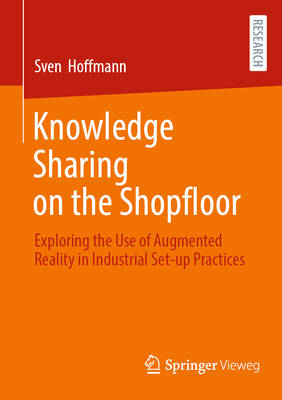
Knowledge Sharing on the Shopfloor
Exploring the Use of Augmented Reality in Industrial Set-Up Practices
Sven Hoffmann
Paperback | Engels
€ 119,45
+ 238 punten
Omschrijving
Technological progress has made significant advances in manufacturing companies during the fourth industrial revolution. Production machines and their operation are leading to a sharp increase in the demands placed on personnel. Set-up processes on machines and systems are generally characterized by a high level of manual effort and complexity, which means that they are knowledge-intensive activities. Therefore, there is a strong need for research into knowledge- and expertise-sharing practices and their accompanying technical assistance, which has a long tradition in the academic field of computer-supported cooperative work. This book addresses these discussions by exploring manual set-up processes, seeking to provide insight into how cyber-physically embedded augmented reality (AR) technologies should be designed to support knowledge and expertise sharing processes. Based on design case studies in manufacturing companies, the main design implications are first derived from a practice-oriented perspective and then translated into implementations of AR technologies.
Specificaties
Betrokkenen
- Auteur(s):
- Uitgeverij:
Inhoud
- Aantal bladzijden:
- 321
- Taal:
- Engels
Eigenschappen
- Productcode (EAN):
- 9783658501327
- Verschijningsdatum:
- 3/01/2026
- Uitvoering:
- Paperback
- Formaat:
- Trade paperback (VS)
- Afmetingen:
- 155 mm x 211 mm
- Gewicht:
- 444 g


Alleen bij Standaard Boekhandel
+ 238 punten op je klantenkaart van Standaard Boekhandel
Cadeau

AANGERADEN


Beoordelingen
We publiceren alleen reviews die voldoen aan de voorwaarden voor reviews. Bekijk onze voorwaarden voor reviews.