


- Afhalen na 1 uur in een winkel met voorraad
- Gratis thuislevering in België vanaf € 30
- Ruim aanbod met 7 miljoen producten
- Afhalen na 1 uur in een winkel met voorraad
- Gratis thuislevering in België vanaf € 30
- Ruim aanbod met 7 miljoen producten





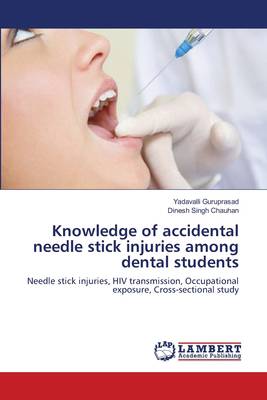
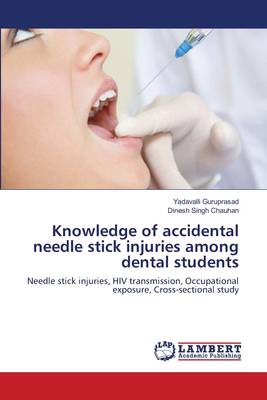
Knowledge of accidental needle stick injuries among dental students
Needle stick injuries, HIV transmission, Occupational exposure, Cross-sectional study
Yadavalli Guruprasad, Dinesh Singh Chauhan
Paperback | Engels
€ 60,95
+ 121 punten
Omschrijving
Injuries from occupational accidents are associated with agents of biological risk, as they are the gateway to serious and potentially lethal infectious diseases that can be spread by contact between people. Several studies have demonstrated that dental students are among the most vulnerable to blood borne exposure.The main objective of this study was to assess the knowledge, attitude and practice regarding risk of HIV transmission through accidental needle stick injury amongst dental students and providing supportive and proper guidelines regarding needle stick injuries and HIV infection. This was a cross sectional study done at a dental college attached to a tertiary care hospital which included third, fourth year students and interns. .Of the 120 students 13(11%) were not even aware that virus could be transmitted through infected needle. A significant proportion of the third year students i.e. 27 (67.5%) were not aware of correct method of disposal of disposable needles and syringes as against interns 17(42.5%). Around 31(26%) said that they would promote active bleeding at the site of injury and 37(30%) said they would take post exposure prophylaxis.
Specificaties
Betrokkenen
- Auteur(s):
- Uitgeverij:
Inhoud
- Aantal bladzijden:
- 68
- Taal:
- Engels
Eigenschappen
- Productcode (EAN):
- 9783659152689
- Verschijningsdatum:
- 12/06/2012
- Uitvoering:
- Paperback
- Afmetingen:
- 150 mm x 220 mm
- Gewicht:
- 107 g


Alleen bij Standaard Boekhandel
+ 121 punten op je klantenkaart van Standaard Boekhandel
CADEAU


Beoordelingen
We publiceren alleen reviews die voldoen aan de voorwaarden voor reviews. Bekijk onze voorwaarden voor reviews.