


- Afhalen na 1 uur in een winkel met voorraad
- Gratis thuislevering in België vanaf € 30
- Ruim aanbod met 7 miljoen producten
- Afhalen na 1 uur in een winkel met voorraad
- Gratis thuislevering in België vanaf € 30
- Ruim aanbod met 7 miljoen producten





€ 83,95
+ 167 punten
Omschrijving
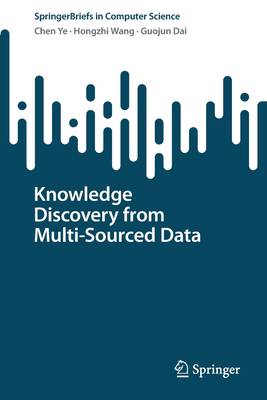
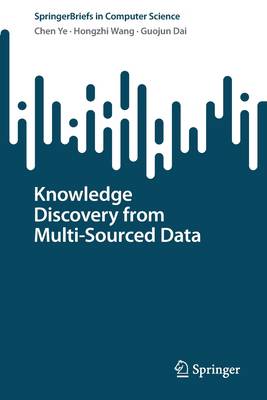
This book addresses several knowledge discovery problems on multi-sourced data where the theories, techniques, and methods in data cleaning, data mining, and natural language processing are synthetically used. This book mainly focuses on three data models: the multi-sourced isomorphic data, the multi-sourced heterogeneous data, and the text data. On the basis of three data models, this book studies the knowledge discovery problems including truth discovery and fact discovery on multi-sourced data from four important properties: relevance, inconsistency, sparseness, and heterogeneity, which is useful for specialists as well as graduate students. Data, even describing the same object or event, can come from a variety of sources such as crowd workers and social media users. However, noisy pieces of data or information are unavoidable. Facing the daunting scale of data, it is unrealistic to expect humans to "label" or tell which data source is more reliable.Hence, it is crucial to identify trustworthy information from multiple noisy information sources, referring to the task of knowledge discovery. At present, the knowledge discovery research for multi-sourced data mainly faces two challenges. On the structural level, it is essential to consider the different characteristics of data composition and application scenarios and define the knowledge discovery problem on different occasions. On the algorithm level, the knowledge discovery task needs to consider different levels of information conflicts and design efficient algorithms to mine more valuable information using multiple clues. Existing knowledge discovery methods have defects on both the structural level and the algorithm level, making the knowledge discovery problem far from totally solved.
Specificaties
Betrokkenen
- Auteur(s):
- Uitgeverij:
Inhoud
- Aantal bladzijden:
- 83
- Taal:
- Engels
- Reeks:
Eigenschappen
- Productcode (EAN):
- 9789811918780
- Verschijningsdatum:
- 15/06/2022
- Uitvoering:
- Paperback
- Formaat:
- Trade paperback (VS)
- Afmetingen:
- 156 mm x 234 mm
- Gewicht:
- 145 g


Alleen bij Standaard Boekhandel
+ 167 punten op je klantenkaart van Standaard Boekhandel
Cadeau

AANGERADEN


Beoordelingen
We publiceren alleen reviews die voldoen aan de voorwaarden voor reviews. Bekijk onze voorwaarden voor reviews.