


- Afhalen na 1 uur in een winkel met voorraad
- Gratis thuislevering in België vanaf € 30
- Ruim aanbod met 7 miljoen producten
- Afhalen na 1 uur in een winkel met voorraad
- Gratis thuislevering in België vanaf € 30
- Ruim aanbod met 7 miljoen producten





€ 78,95
+ 157 punten
Omschrijving
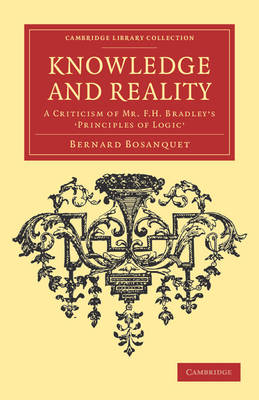
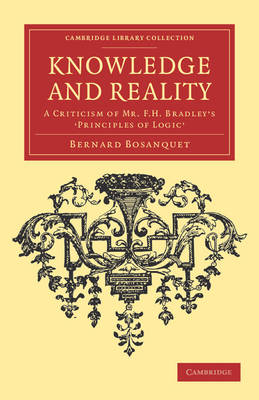
After more than a decade teaching ancient Greek history and philosophy at University College, Oxford, British philosopher and political theorist Bernard Bosanquet (1848-1923) resigned from his post to spend more time writing. He was particularly interested in contemporary social theory, and was involved with the Charity Organisation Society and the London Ethical Society. He wrote numerous articles before beginning this book, which was his first and was published in 1885 as a response to the Principles of Logic, published in 1883, by his contemporary F. H. Bradley (1846-1924). Bosanquet, who was deeply influenced by the German philosopher Hegel (1770-1831), argues that there are 'signs of a philosophical movement in this country which may assimilate what is really great in European philosophy, without forfeiting the distinctive merits of English thought'. With this as the framework, the book examines the relationship of judgment and logic to knowledge.
Specificaties
Betrokkenen
- Auteur(s):
- Uitgeverij:
Inhoud
- Aantal bladzijden:
- 350
- Taal:
- Engels
- Reeks:
Eigenschappen
- Productcode (EAN):
- 9781108040181
- Verschijningsdatum:
- 29/12/2011
- Uitvoering:
- Paperback
- Formaat:
- Trade paperback (VS)
- Afmetingen:
- 140 mm x 216 mm
- Gewicht:
- 444 g


Alleen bij Standaard Boekhandel
+ 157 punten op je klantenkaart van Standaard Boekhandel
CADEAU

AANGERADEN


Beoordelingen
We publiceren alleen reviews die voldoen aan de voorwaarden voor reviews. Bekijk onze voorwaarden voor reviews.