


- Afhalen na 1 uur in een winkel met voorraad
- Gratis thuislevering in België vanaf € 30
- Ruim aanbod met 7 miljoen producten
- Afhalen na 1 uur in een winkel met voorraad
- Gratis thuislevering in België vanaf € 30
- Ruim aanbod met 7 miljoen producten





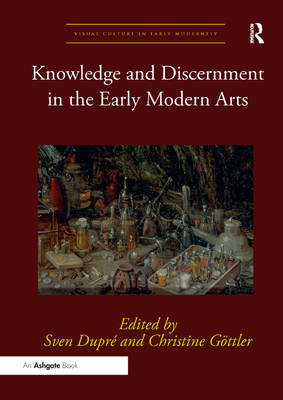
Knowledge and Discernment in the Early Modern Arts
€ 94,95
+ 189 punten
Eenvoudig bestellen
Veilig betalen


Gratis thuislevering vanaf € 30 (via bpost)
Gratis levering in je Standaard Boekhandel
Omschrijving
In early modern Europe, discernment emerged as a key notion at the intersection of various domains in both learned and artisanal cultures. Often used synonymously with judgment, ingenuity, and taste, discernment defined the ability to perceive and understand the secrets of nature and art, and became explicitly connected with a kind of knowledge available only to experts in the respective fields. With contributions by historians of art and historians of science, and with geographic coverage focusing on the Low Countries and their multiple connections to different parts of the world, this volume reframes recent scholarship on what the editors term 'cultures of knowledge and discernment' in the early modern period. The collection is innovative in its focus on investigating types of knowledge linked to what was then called the 'science' (scientia) of art, to artistic expertise and connoisseurship, and to 'secrets of art and nature.'
Specificaties
Betrokkenen
- Uitgeverij:
Inhoud
- Aantal bladzijden:
- 342
- Taal:
- Engels
- Reeks:
Eigenschappen
- Productcode (EAN):
- 9780367334079
- Verschijningsdatum:
- 18/04/2019
- Uitvoering:
- Paperback
- Formaat:
- Trade paperback (VS)
- Afmetingen:
- 174 mm x 246 mm
- Gewicht:
- 589 g


Alleen bij Standaard Boekhandel
+ 189 punten op je klantenkaart van Standaard Boekhandel
CADEAU

AANGERADEN


Beoordelingen
We publiceren alleen reviews die voldoen aan de voorwaarden voor reviews. Bekijk onze voorwaarden voor reviews.