


- Afhalen na 1 uur in een winkel met voorraad
- Gratis thuislevering in België vanaf € 30
- Ruim aanbod met 7 miljoen producten
- Afhalen na 1 uur in een winkel met voorraad
- Gratis thuislevering in België vanaf € 30
- Ruim aanbod met 7 miljoen producten





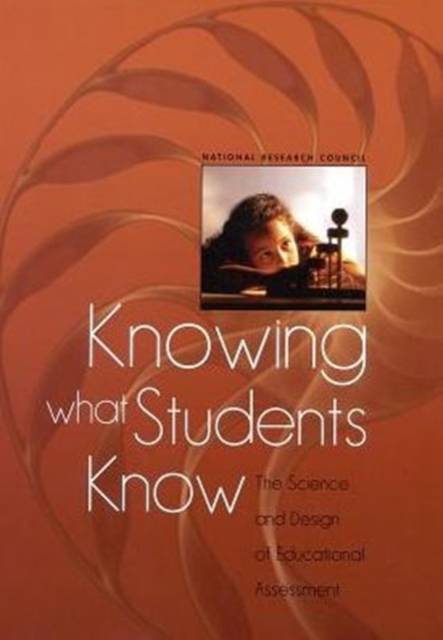
Knowing What Students Know
The Science and Design of Educational Assessment
National Research Council, Division of Behavioral and Social Sciences and Education, Center for Education, Board on Testing and Assessment, Committee on the Foundations of Assessment
Paperback | Engels
€ 76,45
+ 152 punten
Omschrijving
Education is a hot topic. From the stage of presidential debates to tonight's dinner table, it is an issue that most Americans are deeply concerned about. While there are many strategies for improving the educational process, we need a way to find out what works and what doesn't work as well. Educational assessment seeks to determine just how well students are learning and is an integral part of our quest for improved education.
The nation is pinning greater expectations on educational assessment than ever before. We look to these assessment tools when documenting whether students and institutions are truly meeting education goals. But we must stop and ask a crucial question: What kind of assessment is most effective?
At a time when traditional testing is subject to increasing criticism, research suggests that new, exciting approaches to assessment may be on the horizon. Advances in the sciences of how people learn and how to measure such learning offer the hope of developing new kinds of assessments-assessments that help students succeed in school by making as clear as possible the nature of their accomplishments and the progress of their learning.
Knowing What Students Know essentially explains how expanding knowledge in the scientific fields of human learning and educational measurement can form the foundations of an improved approach to assessment. These advances suggest ways that the targets of assessment-what students know and how well they know it-as well as the methods used to make inferences about student learning can be made more valid and instructionally useful. Principles for designing and using these new kinds of assessments are presented, and examples are used to illustrate the principles. Implications for policy, practice, and research are also explored.
With the promise of a productive research-based approach to assessment of student learning, Knowing What Students Know will be important to education administrators, assessment designers, teachers and teacher educators, and education advocates.
The nation is pinning greater expectations on educational assessment than ever before. We look to these assessment tools when documenting whether students and institutions are truly meeting education goals. But we must stop and ask a crucial question: What kind of assessment is most effective?
At a time when traditional testing is subject to increasing criticism, research suggests that new, exciting approaches to assessment may be on the horizon. Advances in the sciences of how people learn and how to measure such learning offer the hope of developing new kinds of assessments-assessments that help students succeed in school by making as clear as possible the nature of their accomplishments and the progress of their learning.
Knowing What Students Know essentially explains how expanding knowledge in the scientific fields of human learning and educational measurement can form the foundations of an improved approach to assessment. These advances suggest ways that the targets of assessment-what students know and how well they know it-as well as the methods used to make inferences about student learning can be made more valid and instructionally useful. Principles for designing and using these new kinds of assessments are presented, and examples are used to illustrate the principles. Implications for policy, practice, and research are also explored.
With the promise of a productive research-based approach to assessment of student learning, Knowing What Students Know will be important to education administrators, assessment designers, teachers and teacher educators, and education advocates.
Specificaties
Betrokkenen
- Auteur(s):
- Uitgeverij:
Inhoud
- Aantal bladzijden:
- 382
- Taal:
- Engels
Eigenschappen
- Productcode (EAN):
- 9780309293228
- Verschijningsdatum:
- 27/10/2001
- Uitvoering:
- Paperback
- Formaat:
- Trade paperback (VS)
- Afmetingen:
- 178 mm x 254 mm
- Gewicht:
- 798 g


Alleen bij Standaard Boekhandel
+ 152 punten op je klantenkaart van Standaard Boekhandel
Cadeau

AANGERADEN


Beoordelingen
We publiceren alleen reviews die voldoen aan de voorwaarden voor reviews. Bekijk onze voorwaarden voor reviews.