


- Afhalen na 1 uur in een winkel met voorraad
- Gratis thuislevering in België vanaf € 30
- Ruim aanbod met 7 miljoen producten
- Afhalen na 1 uur in een winkel met voorraad
- Gratis thuislevering in België vanaf € 30
- Ruim aanbod met 7 miljoen producten





€ 48,95
+ 97 punten
Omschrijving
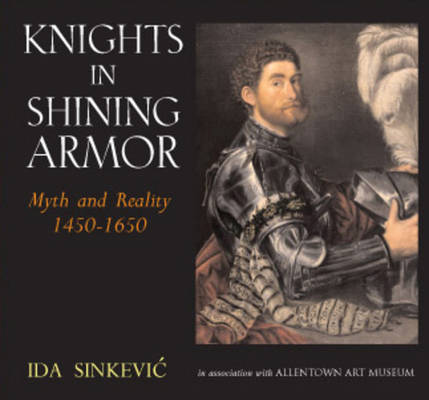
During the period between 1450-1650, gunpowder weapons and new military technologies gradually extinguished the need for knights in shining armor on the battlefield. Strangely enough, this was also the period that witnessed unsurpassed production of elaborate, richly decorated, and superbly crafted suits of armor. Armor became a symbol of status and was worn increasingly for ceremonial purposes. It was even adopted into everyday life and dress, and became prominently and frequently displayed in works of art.Knights in Shining Armor, is a scholarly significant, popularly written, and beautifully illustrated exploration of multiple roles of arms and armor in the Renaissance and Baroque societies. Arms and armor are examined as technological achievements, symbols of fascination and nostalgia for the chivalric ideals of the bygone medieval era, as a means of understanding changes in moral and ethical views of human combat, and as an important source for gauging concepts of gender and class at the time.Principal author, Ida Sinkevi´c, looks at armor as an icon of popular culture, the image-maker that defines the identity of both an individual and a group, and explores social and historical reasons for its fame. Contributory essays by Jeffrey L. Forgeng and Cristina Bauer, James Clifton, and Noelle Ocon reveal fascinating information about the reality and fantasy in representation of arms, the intimate relationship between armor and printmaking, and the impact of scientific analysis on the attribution of the works of art that represent armor.Lavishly illustrated with over one hundred photographs, the book displays major works of many famous artists, such as Rubens, Dürer, and Tintoretto, as well as exquisite examples of visually stunning and masterfully crafted suits of armor, helmets, shields, and edged weapons, such as swords and rapiers. A sumptuous and innovative exploration of the arms and armor of the Renaissance and Baroque eras, Knights in Shining Armor: Myth and Reality, 1450-1650 is published to coincide with the landmark exhibition at the Allentown Art Museum curated by Ida Sinkevi´c .Principal author and editor Ida Sinkevicis Associate Professor of Art at Lafayette College, Easton, Pennsylvania. She acquired her M.F.A. and a Ph.D. from Princeton University and M.A. from Southern Methodist University, Dallas, Texas. She is the author of a number of articles and the book on the twelfth-century Byzantine monument, The Church of St. Panteleimon, Nerezi: Architecture, Programme, Patronage. Ida Sinkevic lectures both in the U.S. and abroad, including France, England, Russia, and Macedonia. She is a recipient of numerous scholarships and grants, including several A.G. Mellon Fellowships. Her current scholarly work explores medieval art and architecture in Mediterranean countries and the residual medieval culture during the Renaissance and beyond.
Specificaties
Betrokkenen
- Auteur(s):
- Uitgeverij:
Inhoud
- Aantal bladzijden:
- 84
- Taal:
- Engels
Eigenschappen
- Productcode (EAN):
- 9781593730550
- Verschijningsdatum:
- 15/12/2006
- Uitvoering:
- Hardcover
- Formaat:
- Genaaid
- Afmetingen:
- 294 mm x 274 mm
- Gewicht:
- 852 g


Alleen bij Standaard Boekhandel
+ 97 punten op je klantenkaart van Standaard Boekhandel
AANGERADEN


Beoordelingen
We publiceren alleen reviews die voldoen aan de voorwaarden voor reviews. Bekijk onze voorwaarden voor reviews.