


- Afhalen na 1 uur in een winkel met voorraad
- Gratis thuislevering in België vanaf € 30
- Ruim aanbod met 7 miljoen producten
- Afhalen na 1 uur in een winkel met voorraad
- Gratis thuislevering in België vanaf € 30
- Ruim aanbod met 7 miljoen producten





Omschrijving
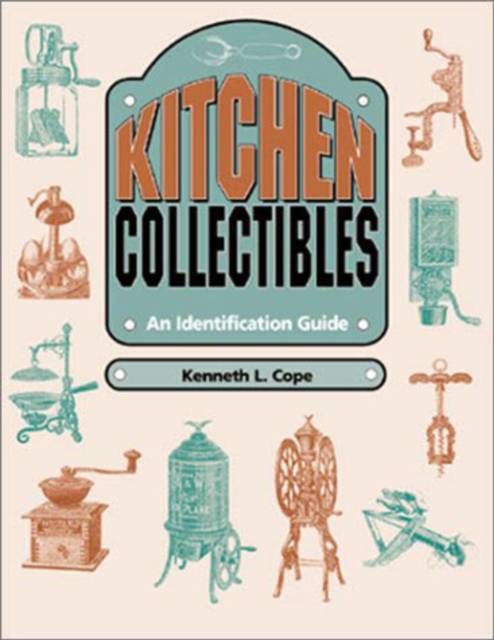
Kitchen gadgets, tools, and appliances, like those found in your grandmother's kitchen, have become major collectibles, bringing increasingly higher prices. Yet, how can you put a value on an item that you can't identify? Here is the first book to concentrate on the identification of kitchen collectibles dating from 1830 to 1930. With over 600 manufacturers listed and described (as to location, date of operation, patents, and items made) and nearly 2,000 illustrations taken from original catalogs and advertisements, this book allows you to clearly identify your collectible. The offerings of such makers as Andrews Wire and Iron Works, Arcade Mfg., Dover Stamping, Enterprise Mfg., Erie Specialty, Kieckhefer Bros., Landers, Frary & Clark, Silver & Co., Wagner Mfg., and Watertown Cutlery (among many, many others ) are presented with a visual clairty that makes comparisons with your collectibles much easier and more accurate. To make identification easier still, the book contains an exclusive listing of the trade names associated with each manufacturer and another alphabetical listing of manufacturers with their associated patent dates. This permits the cross-reference, and thus identification, of collectibles even when they are not marked with a manufacturer's name but just a trade name or patent date. Mr. Cope also helps the reader identify non-American pieces by providing a separate list of abbreviations found on such items, together with their country and an English translation of their meanings. Finally, the book is fully indexed so that all kitchen items of any type can be located and viewed. This is information that cannot be found anywhere else and is absolutely invaluable to the collector, dealer, researcher, or anyone else who is simply interested in what grandmother used in her kitchen.
Specificaties
Betrokkenen
- Auteur(s):
- Uitgeverij:
Inhoud
- Aantal bladzijden:
- 308
- Taal:
- Engels
Eigenschappen
- Productcode (EAN):
- 9781879335936
- Verschijningsdatum:
- 1/09/2000
- Uitvoering:
- Paperback
- Formaat:
- Trade paperback (VS)
- Afmetingen:
- 216 mm x 279 mm
- Gewicht:
- 870 g


Alleen bij Standaard Boekhandel
+ 96 punten op je klantenkaart van Standaard Boekhandel
AANGERADEN


Beoordelingen
We publiceren alleen reviews die voldoen aan de voorwaarden voor reviews. Bekijk onze voorwaarden voor reviews.