


- Afhalen na 1 uur in een winkel met voorraad
- Gratis thuislevering in België vanaf € 30
- Ruim aanbod met 7 miljoen producten
- Afhalen na 1 uur in een winkel met voorraad
- Gratis thuislevering in België vanaf € 30
- Ruim aanbod met 7 miljoen producten





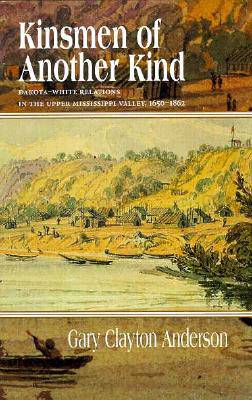
Kinsmen of Another Kind
Dakota-White Relations in the Upper Mississippi Valley, 1650-1862
Gary C Anderson
€ 35,95
+ 71 punten
Eenvoudig bestellen
Veilig betalen


Gratis thuislevering vanaf € 30 (via bpost)
Gratis levering in je Standaard Boekhandel
Omschrijving
In August 1862 the Dakota or Eastern Sioux, frustrated at being defrauded by the United States government and at losing their land and livelihood, resorted to armed conflict against the white settlers of southern Minnesota. Gary Clayton Anderson is the first historian to use an ethnohistorical approach to explain why, after more than two centuries of friendly interaction, the bonds of peace between the Dakota and whites suddenly broke apart.
In Kinsmen of Another Kind, Anderson shows how the Dakota concept of kinship affected the tribe's complex relationships with the whites. The Dakota were obligated to help their relatives by any means possible. Traders who were adopted or who married into the tribe gained from this relationship--but had reciprocal responsibilities. After the 1820s, the trade in furs declined, more whites moved into the territory, and the Dakota became more economically dependent on the whites. When American traders and officials failed to fulfill their obligations, many Dakotas finally saw the whites as enemies to be driven from Minnesota.
This reprint edition of Anderson's work, first published in 1984, provides a new understanding of a complicated period in Minnesota history.
In Kinsmen of Another Kind, Anderson shows how the Dakota concept of kinship affected the tribe's complex relationships with the whites. The Dakota were obligated to help their relatives by any means possible. Traders who were adopted or who married into the tribe gained from this relationship--but had reciprocal responsibilities. After the 1820s, the trade in furs declined, more whites moved into the territory, and the Dakota became more economically dependent on the whites. When American traders and officials failed to fulfill their obligations, many Dakotas finally saw the whites as enemies to be driven from Minnesota.
This reprint edition of Anderson's work, first published in 1984, provides a new understanding of a complicated period in Minnesota history.
Specificaties
Betrokkenen
- Auteur(s):
- Uitgeverij:
Inhoud
- Aantal bladzijden:
- 415
- Taal:
- Engels
- Reeks:
Eigenschappen
- Productcode (EAN):
- 9780873513531
- Verschijningsdatum:
- 15/09/1997
- Uitvoering:
- Paperback
- Formaat:
- Trade paperback (VS)
- Afmetingen:
- 140 mm x 213 mm
- Gewicht:
- 476 g


Alleen bij Standaard Boekhandel
+ 71 punten op je klantenkaart van Standaard Boekhandel
CADEAU

AANGERADEN


Beoordelingen
We publiceren alleen reviews die voldoen aan de voorwaarden voor reviews. Bekijk onze voorwaarden voor reviews.