


- Afhalen na 1 uur in een winkel met voorraad
- Gratis thuislevering in België vanaf € 30
- Ruim aanbod met 7 miljoen producten
- Afhalen na 1 uur in een winkel met voorraad
- Gratis thuislevering in België vanaf € 30
- Ruim aanbod met 7 miljoen producten





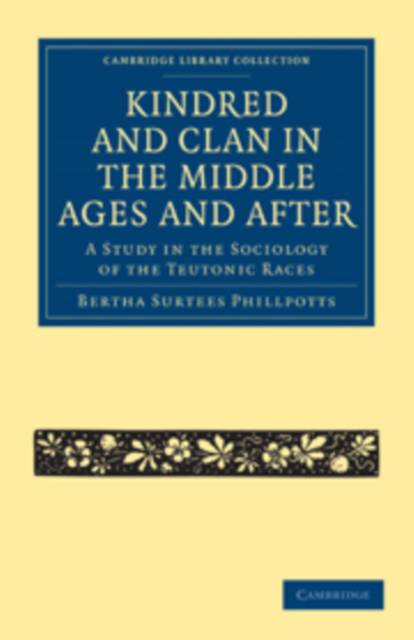
Kindred and Clan in the Middle Ages and After
A Study in the Sociology of the Teutonic Races
Bertha Surtees Phillpotts
€ 78,95
+ 157 punten
Uitvoering
Omschrijving
Bertha S. Phillpotts (1863-1932) was an English historian and linguist of Scandinavia who served as the Director of Scandinavian Studies in the University of Cambridge from 1926 to 1932. First published as part of Cambridge Archaeological and Ethnological Series in 1913, this pioneering and highly influential book contains a detailed examination of kinship structures in northern Europe during the early medieval period. In this work, Phillpotts analyses the laws and literature of seven northern European countries to explore the kinship structure of their ancient societies. The references to the legal concept of 'weregild' and the description of gender hierarchies, together with the range of evidence examined, cause this work to remain of considerable relevance for the understanding of kinship systems in medieval Germanic and Scandinavian societies.
Specificaties
Betrokkenen
- Auteur(s):
- Uitgeverij:
Inhoud
- Aantal bladzijden:
- 320
- Taal:
- Engels
- Reeks:
Eigenschappen
- Productcode (EAN):
- 9781108010504
- Verschijningsdatum:
- 31/10/2010
- Uitvoering:
- Paperback
- Formaat:
- Trade paperback (VS)
- Afmetingen:
- 140 mm x 216 mm
- Gewicht:
- 408 g


Alleen bij Standaard Boekhandel
+ 157 punten op je klantenkaart van Standaard Boekhandel
Cadeau

AANGERADEN


Beoordelingen
We publiceren alleen reviews die voldoen aan de voorwaarden voor reviews. Bekijk onze voorwaarden voor reviews.