


- Afhalen na 1 uur in een winkel met voorraad
- Gratis thuislevering in België vanaf € 30
- Ruim aanbod met 7 miljoen producten
- Afhalen na 1 uur in een winkel met voorraad
- Gratis thuislevering in België vanaf € 30
- Ruim aanbod met 7 miljoen producten





€ 32,45
+ 64 punten
Omschrijving
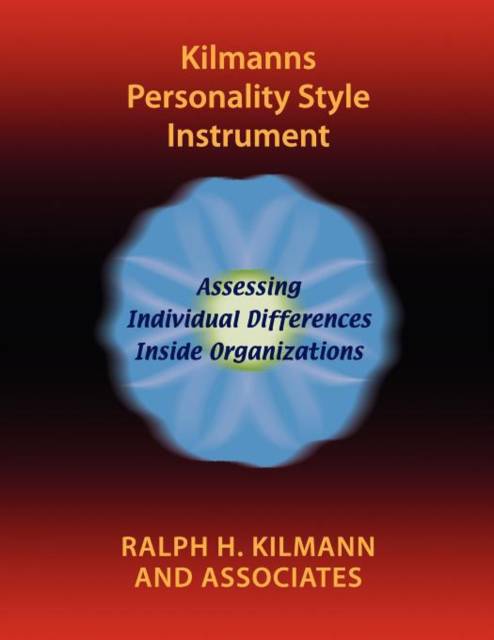
Based on C.G. Jung's 1921 theory of psychological types, four personality styles are examined in an organizational context: Sensation Thinking (ST), Intuition Thinking (NT), Sensation Feeling (SF), and Intuition Feeling (NF). These four personality styles have vastly different preferences and approaches for defining and solving workplace problems. Kilmanns Personality Style Instrument is a self-report assessment that takes 10 to 15 minutes to complete and another five minutes to graph the results: Individuals and groups discover that they tend to approach problems in either (1) a specialized manner (favoring one style of managing problems while ignoring the other three styles) or (2) a generalist manner (giving due attention to how each of the four styles plays an important role in managing complex problems). In either case, individuals and groups learn why different styles are needed for sensing problems, defining problems, deriving solutions, implementing solutions, and then evaluating results.
Specificaties
Betrokkenen
- Auteur(s):
- Uitgeverij:
Inhoud
- Aantal bladzijden:
- 28
- Taal:
- Engels
Eigenschappen
- Productcode (EAN):
- 9780983274292
- Verschijningsdatum:
- 21/01/2012
- Uitvoering:
- Paperback
- Formaat:
- Trade paperback (VS)
- Afmetingen:
- 216 mm x 279 mm
- Gewicht:
- 90 g


Alleen bij Standaard Boekhandel
+ 64 punten op je klantenkaart van Standaard Boekhandel
Cadeau

AANGERADEN


Beoordelingen
We publiceren alleen reviews die voldoen aan de voorwaarden voor reviews. Bekijk onze voorwaarden voor reviews.