


- Afhalen na 1 uur in een winkel met voorraad
- Gratis thuislevering in België vanaf € 30
- Ruim aanbod met 7 miljoen producten
- Afhalen na 1 uur in een winkel met voorraad
- Gratis thuislevering in België vanaf € 30
- Ruim aanbod met 7 miljoen producten





€ 195,45
+ 390 punten
Omschrijving
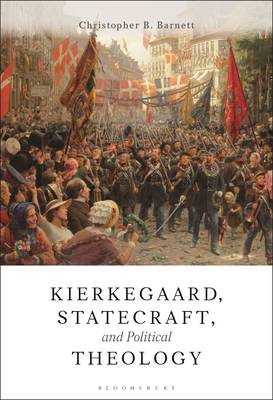
Written against the fractured landscape of contemporary Christianity and the increasing popularity of "political theology," Christopher B. Barnett wrestles with an intriguing question: what if Søren Kierkegaard's rejection of modern politics was not a form of spiritual quietism but of Christian resistance?
Tracing the rise of the modern secular state, Barnett argues that Kierkegaard's refusal of "the political" coincides with the nationalistic First Schleswig War (1848-52) and, in doing so, anticipates a crisis now impossible to ignore. For Kierkegaard, obsessive political passion signals a theological inversion: as the state grows in importance, God is displaced. The upshot is not freedom but moral exhaustion-a society saturated with envy, despair, and groupthink.
Barnett also contends that Kierkegaard's reflections on politics and the modern state would find a receptive audience in a trio of twentieth-century figures: Dietrich Bonhoeffer, Jacques Ellul, and René Girard. Loosely gathered under the heading of "apostolical radicalism," each of these thinkers, albeit in different ways, demonstrates that the modern state organizes contemporary life through bureaucracy, technique, propaganda, and ritualized antagonism. State politics may promise meaning, identity, and moral clarity, but as the rise of political theology shows, it ultimately absorbs all aspects of life into the sphere of politics.
Kierkegaard, Statecraft and Political Theology unleashes Kierkegaard's political thought as a live provocation, drawing unexpected lines between Christian theology and praxis and our present age of social media, tribalized politics, and permanent war. In the end, this book challenges readers to ask whether the modern state is leading to salvation-or the apocalypse.
Tracing the rise of the modern secular state, Barnett argues that Kierkegaard's refusal of "the political" coincides with the nationalistic First Schleswig War (1848-52) and, in doing so, anticipates a crisis now impossible to ignore. For Kierkegaard, obsessive political passion signals a theological inversion: as the state grows in importance, God is displaced. The upshot is not freedom but moral exhaustion-a society saturated with envy, despair, and groupthink.
Barnett also contends that Kierkegaard's reflections on politics and the modern state would find a receptive audience in a trio of twentieth-century figures: Dietrich Bonhoeffer, Jacques Ellul, and René Girard. Loosely gathered under the heading of "apostolical radicalism," each of these thinkers, albeit in different ways, demonstrates that the modern state organizes contemporary life through bureaucracy, technique, propaganda, and ritualized antagonism. State politics may promise meaning, identity, and moral clarity, but as the rise of political theology shows, it ultimately absorbs all aspects of life into the sphere of politics.
Kierkegaard, Statecraft and Political Theology unleashes Kierkegaard's political thought as a live provocation, drawing unexpected lines between Christian theology and praxis and our present age of social media, tribalized politics, and permanent war. In the end, this book challenges readers to ask whether the modern state is leading to salvation-or the apocalypse.
Specificaties
Betrokkenen
- Auteur(s):
- Uitgeverij:
Inhoud
- Aantal bladzijden:
- 232
- Taal:
- Engels
Eigenschappen
- Productcode (EAN):
- 9781350408531
- Verschijningsdatum:
- 11/06/2026
- Uitvoering:
- Hardcover
- Formaat:
- Genaaid
- Afmetingen:
- 156 mm x 234 mm
- Gewicht:
- 494 g


Alleen bij Standaard Boekhandel
+ 390 punten op je klantenkaart van Standaard Boekhandel
Cadeau

AANGERADEN


Beoordelingen
We publiceren alleen reviews die voldoen aan de voorwaarden voor reviews. Bekijk onze voorwaarden voor reviews.