


- Afhalen na 1 uur in een winkel met voorraad
- Gratis thuislevering in België vanaf € 30
- Ruim aanbod met 7 miljoen producten
- Afhalen na 1 uur in een winkel met voorraad
- Gratis thuislevering in België vanaf € 30
- Ruim aanbod met 7 miljoen producten





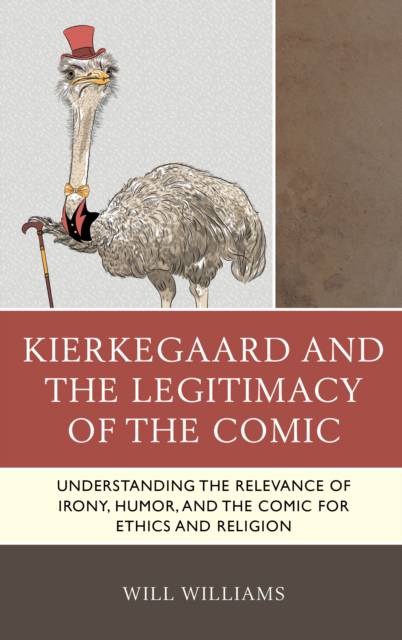
Kierkegaard and the Legitimacy of the Comic
Understanding the Relevance of Irony, Humor, and the Comic for Ethics and Religion
Will Williams
Hardcover | Engels
€ 220,45
+ 440 punten
Uitvoering
Omschrijving
While some see the comic as trivial, fit mainly for amusement or distraction, Søren Kierkegaard disagrees. This book examines Kierkegaard's earnest understanding of the nature of the comic and how even the triviality of comic jest is deeply tied to ethics and religion. It rigorously explicates terms such as "irony," "humor," "jest," and "comic" in Kierkegaard, revealing them to be essential to his philosophical and theological program, beyond aesthetic interest alone.
Drawing centrally from Kierkegaard's most concentrated treatment of these ideas, Concluding Unscientific Postscript (1846), this account argues that he defines the comic as a "contradiction" or misrelation that is essentially (though not absolutely) painless because it provides a "way out." The comic lies in a contradiction between norms and so springs from one's viewpoint, whether ethical or religious. "Irony" and "humor" play essential transitional roles for Kierkegaard's famous account of the stages of existence because subjective development is closely tied to one's capacity to perceive the comic, making the comic both diagnostic of and formative for one's subjective maturity. For Kierkegaard, the Christian is far from humorless, instead having the maximal comic perception because he has the highest possible subjective development. The book demonstrates that the comic is not the expression of a particular pseudonym or of a single period in Kierkegaard's thinking but is an abiding and fundamental concept for him. It finds his comic understanding even outside of Postscript, locating it in such differing works as Prefaces (1844), Upbuilding Discourses in Various Spirits (1847), and the Corsair affair (c.1845-1848). The book also examines the comic in contemporary Kierkegaard scholarship. First, it argues that Deconstructionists, while accurately perceiving the widespread irony in Kierkegaard's corpus, incorrectly take the irony to imply a lack of earnest interest in philosophy and theology, misunderstanding Kierkegaard on the nature of irony. Second, it considers two theological readings to argue that their positions, while generally preferable to the Deconstructionists', lack the same attentiveness to the comic's role in Kierkegaard. Their significant theological arguments would be strengthened by increased appreciation of the legitimate power of the comic for cultivating ethics and religion.Specificaties
Betrokkenen
- Auteur(s):
- Uitgeverij:
Inhoud
- Aantal bladzijden:
- 226
- Taal:
- Engels
Eigenschappen
- Productcode (EAN):
- 9781498577144
- Verschijningsdatum:
- 15/09/2018
- Uitvoering:
- Hardcover
- Formaat:
- Genaaid
- Afmetingen:
- 160 mm x 231 mm
- Gewicht:
- 476 g



Alleen bij Standaard Boekhandel
+ 440 punten op je klantenkaart van Standaard Boekhandel
Cadeau

AANGERADEN


Beoordelingen
We publiceren alleen reviews die voldoen aan de voorwaarden voor reviews. Bekijk onze voorwaarden voor reviews.