


- Afhalen na 1 uur in een winkel met voorraad
- Gratis thuislevering in België vanaf € 30
- Ruim aanbod met 7 miljoen producten
- Afhalen na 1 uur in een winkel met voorraad
- Gratis thuislevering in België vanaf € 30
- Ruim aanbod met 7 miljoen producten





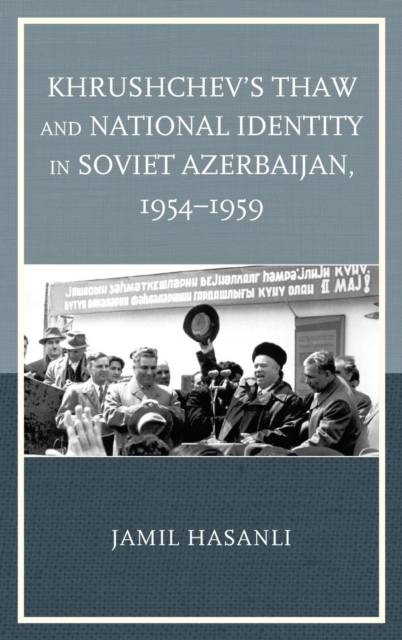
Khrushchev's Thaw and National Identity in Soviet Azerbaijan, 1954-1959
Jamil Hasanli
€ 322,45
+ 644 punten
Omschrijving
On February 25, 1956, Soviet leader Nikita S. Khrushchev delivered the so-called "secret speech" in the Twentieth Party Congress of the CPSU in which he denounced Stalin's transgressions and the cult of personality around the deceased dictator. Replete with sharp criticism of the Terror of the late 1930s, the unpreparedness of the USSR for the Nazi invasion, numerous wartime blunders, and the deportation of various nationalities, the speech reverberated throughout the subordinate Soviet republics. For republics such as Azerbaijan, the speech was an unmistakable signal to readjust the entire political orientation and figure out ways to redefine governance in post-Stalin era. Previously frozen under the mortal threat of Stalinist persecution, various forms of national self-expression began to experience rapid revival under the Khrushchev thaw. Encouraged by the winds of change at the Center, the Azeris cautiously began to reclaim possession of their administrative domain. Among other local initiatives, the declaration of the Azerbaijani language as the official language was one step that stood out in its audacity, for it was not pre-arranged with the Kremlin and defied the modus operandi of the Soviet leadership. Somewhat reformist in his intentions yet ignorant of the non-Slavic peripheries, Mr. Khrushchev had not foreseen the scenarios that would unfold as a result of its new tone and the developments that would come to be interpreted as the rise of nationalism in the republics. Jamil Hasanli's research on 1950s' Azerbaijan sheds light on this watershed period in Soviet history while also furnishing the reader with a greater understanding of the root causes of the dissolution of the USSR.
Specificaties
Betrokkenen
- Auteur(s):
- Uitgeverij:
Inhoud
- Aantal bladzijden:
- 482
- Taal:
- Engels
- Reeks:
Eigenschappen
- Productcode (EAN):
- 9781498508131
- Verschijningsdatum:
- 18/12/2014
- Uitvoering:
- Hardcover
- Formaat:
- Genaaid
- Afmetingen:
- 157 mm x 231 mm
- Gewicht:
- 839 g



Alleen bij Standaard Boekhandel
+ 644 punten op je klantenkaart van Standaard Boekhandel
Cadeau

AANGERADEN


Beoordelingen
We publiceren alleen reviews die voldoen aan de voorwaarden voor reviews. Bekijk onze voorwaarden voor reviews.