


- Afhalen na 1 uur in een winkel met voorraad
- Gratis thuislevering in België vanaf € 30
- Ruim aanbod met 7 miljoen producten
- Afhalen na 1 uur in een winkel met voorraad
- Gratis thuislevering in België vanaf € 30
- Ruim aanbod met 7 miljoen producten





€ 21,24
+ 21 punten
Uitvoering
Omschrijving
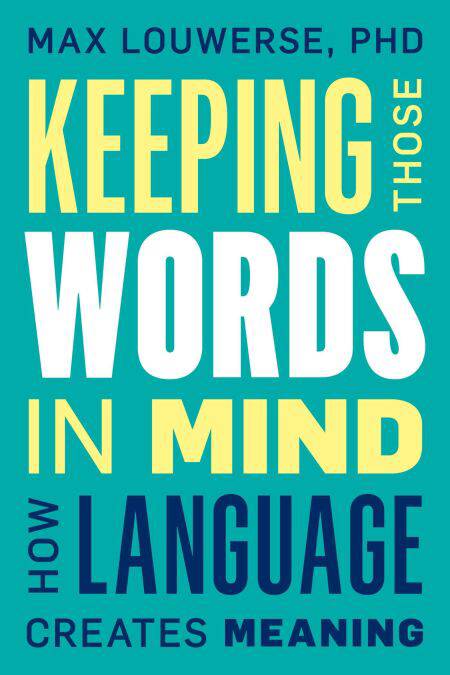
How can humans keep thousands of words in mind and have no difficulty understanding trillions of sentences? The answer to this question might lie in parents teaching their children language skills, or in in the human brain, which may be equipped with a language instinct or maybe in impressive memory skills that link words to their perceptual information. Undoubtedly, there is some truth to some of these explanations. But one answer – perhaps the most important answer – has been largely ignored. Keeping Those Words in Mind tries to remedy this oversight.
Linguist and cognitive psychologist Max Louwerse, PhD. argues that understanding language is not just possible because of memory, brains, environment and computation, but because of the patterns in the sequence of sounds and words themselves.He demonstrates that what seems to be an arbitrary communication system, with arbitrary characters and sounds that become words, and arbitrary meanings for those words, actually is a well-organized system that has evolved over tens of thousands of years to make communication as efficient as it is. What is needed for humans to acquire language, is for humans to recognize and discover the patterns in our communication system.
By examining how our brains process language and find patterns, the intricacies of the language system itself, and even scientific breakthroughs in computer science and artificial intelligence, Keeping Those Words in Mind brings a brand new and interdisciplinary explanation for our ability to extract meaning from language.
Linguist and cognitive psychologist Max Louwerse, PhD. argues that understanding language is not just possible because of memory, brains, environment and computation, but because of the patterns in the sequence of sounds and words themselves.He demonstrates that what seems to be an arbitrary communication system, with arbitrary characters and sounds that become words, and arbitrary meanings for those words, actually is a well-organized system that has evolved over tens of thousands of years to make communication as efficient as it is. What is needed for humans to acquire language, is for humans to recognize and discover the patterns in our communication system.
By examining how our brains process language and find patterns, the intricacies of the language system itself, and even scientific breakthroughs in computer science and artificial intelligence, Keeping Those Words in Mind brings a brand new and interdisciplinary explanation for our ability to extract meaning from language.
Specificaties
Betrokkenen
- Auteur(s):
- Uitgeverij:
Inhoud
- Aantal bladzijden:
- 360
- Taal:
- Engels
Eigenschappen
- Productcode (EAN):
- 9781633886513
- Verschijningsdatum:
- 14/07/2021
- Uitvoering:
- E-book
- Beveiligd met:
- Adobe DRM
- Formaat:
- ePub


Alleen bij Standaard Boekhandel
+ 21 punten op je klantenkaart van Standaard Boekhandel
CADEAU

AANGERADEN


Beoordelingen
We publiceren alleen reviews die voldoen aan de voorwaarden voor reviews. Bekijk onze voorwaarden voor reviews.