


- Afhalen na 1 uur in een winkel met voorraad
- Gratis thuislevering in België vanaf € 30
- Ruim aanbod met 7 miljoen producten
- Afhalen na 1 uur in een winkel met voorraad
- Gratis thuislevering in België vanaf € 30
- Ruim aanbod met 7 miljoen producten





Omschrijving
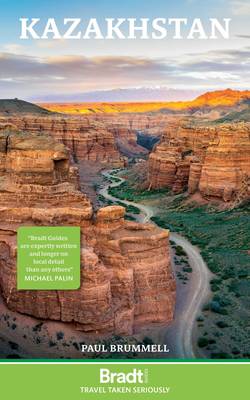
This thoroughly updated fourth edition of Bradt's Kazakhstan remains the only guidebook dedicated solely to the world's ninth largest country - a thrillingly fresh destination that even well-seasoned travellers will find unfamiliar and exotic. Geographically, this Central Asian state is impressively varied: choose from snow-covered peaks with excellent skiing opportunities, hiking trails through valleys, secluded lakes in the Tian Shan Mountains, endless semi-desert steppes and the Caspian Sea's blue waters. Culturally, Kazakhstan is similarly diverse, enabling visitors to enjoy authentic local hospitality from 130 ethnic groups. Kazakhstan is a modern country with a profound appreciation of its nomadic roots; petroglyph sites with ancient rock art plus the remains of Silk Road settlements testify to its varied history. Politically and socially, Kazakhstan now oscillates between east and west - a vibrancy reflected in its architecture, lifestyle and national ambitions. The small Caspian city of Aktau served as the cultural capital of the Turkic world during 2025, while the country's capital (Astana) is a statement of western-inspired modernity. Leafy Almaty, meanwhile, with its fountains and parks, remains by far the most charming (and somewhat nostalgic) city. Where you venture depends, in part, on when you visit - and every season offers something special. Late summer is best for mountain hiking, particularly in the Altai Mountains, sleeping on the shores of the Kolsai Lakes, or exploring the Caspian Sea coast. Winter is idyllic for skiing and skitouring. Spring and autumn are optimum for southern cities of Shymkent and Turkestan (where the Mausoleum of Khoja Ahmed Yassaui is unmissable). And Baikonur Cosmodrome, of course, is best visited during a spaceport launch. Safe and politically neutral, Kazakhstan is also more accessible than ever: tourist visas are no longer required, and there are numerous direct flights from Europe. Tourist infrastructure has also significantly improved, with faster trains, more comfortable buses and efficient internal flights making it easy to get around. The new edition of Bradt's Kazakhstan covers all recent developments, including more practical information to make independent travel easier. Bradt's guidebook provides the perfect companion for all travellers, from nature lovers to cultural explorers, teenage backpackers to family groups.
Specificaties
Betrokkenen
- Auteur(s):
- Uitgeverij:
Inhoud
- Aantal bladzijden:
- 400
- Taal:
- Engels
Eigenschappen
- Productcode (EAN):
- 9781804693285
- Verschijningsdatum:
- 30/06/2026
- Uitvoering:
- Paperback
- Formaat:
- Trade paperback (VS)
- Afmetingen:
- 133 mm x 216 mm
- Gewicht:
- 322 g


Alleen bij Standaard Boekhandel
+ 64 punten op je klantenkaart van Standaard Boekhandel
Cadeau

AANGERADEN


Beoordelingen
We publiceren alleen reviews die voldoen aan de voorwaarden voor reviews. Bekijk onze voorwaarden voor reviews.