


- Afhalen na 1 uur in een winkel met voorraad
- Gratis thuislevering in België vanaf € 30
- Ruim aanbod met 7 miljoen producten
- Afhalen na 1 uur in een winkel met voorraad
- Gratis thuislevering in België vanaf € 30
- Ruim aanbod met 7 miljoen producten





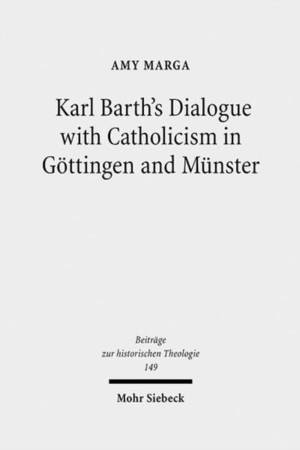
Karl Barth's Dialogue with Catholicism in Gottingen and Munster
Its Significance for His Doctrine of God
Amy Marga
€ 109,45
+ 218 punten
Omschrijving
Amy Marga studies Karl Barth's early encounter with Roman Catholic theology during the 1920s, especially seen in his seminal set of dogmatic lectures given in Gottingen, and his second set of dogmatic lectures, given in Munster and which remain unpublished. Her analysis demonstrates his search for a concept of God's objectivity - Gegenstandlichkeit - which would not be dependent upon philosophically-laden concepts such as the analogia entis, but which would rather be anchored in God's being alone. The author shows that Roman Catholicism, especially the thought of Erich Przywara, became the key interlocutor that helped Barth bring this clarity to his doctrine of revelation and the triune God.
Specificaties
Betrokkenen
- Auteur(s):
- Uitgeverij:
Inhoud
- Aantal bladzijden:
- 199
- Taal:
- Engels
- Reeks:
Eigenschappen
- Productcode (EAN):
- 9783161501487
- Verschijningsdatum:
- 31/12/2010
- Uitvoering:
- Hardcover
- Formaat:
- Genaaid
- Afmetingen:
- 153 mm x 229 mm
- Gewicht:
- 466 g


Alleen bij Standaard Boekhandel
+ 218 punten op je klantenkaart van Standaard Boekhandel

Beoordelingen
We publiceren alleen reviews die voldoen aan de voorwaarden voor reviews. Bekijk onze voorwaarden voor reviews.