Standaard Boekhandel gebruikt cookies en gelijkaardige technologieën om de website goed te laten werken en je een betere surfervaring te bezorgen.
Hieronder kan je kiezen welke cookies je wilt inschakelen:
Technische en functionele cookies
Deze cookies zijn essentieel om de website goed te laten functioneren, en laten je toe om bijvoorbeeld in te loggen. Je kan deze cookies niet uitschakelen.
Analytische cookies
Deze cookies verzamelen anonieme informatie over het gebruik van onze website. Op die manier kunnen we de website beter afstemmen op de behoeften van de gebruikers.
Marketingcookies
Deze cookies delen je gedrag op onze website met externe partijen, zodat je op externe platformen relevantere advertenties van Standaard Boekhandel te zien krijgt.
Bedankt voor het vertrouwen het afgelopen jaar! Om jou te bedanken bieden we GRATIS verzending (in België) aan op alles gedurende de hele maand januari.
Afhalen na 1 uur in een winkel met voorraad
Gratis thuislevering in België vanaf € 30
Ruim aanbod met 7 miljoen producten
Bedankt voor het vertrouwen het afgelopen jaar! Om jou te bedanken bieden we GRATIS verzending (in België) aan op alles gedurende de hele maand januari.
Je kan maximaal 250 producten tegelijk aan je winkelmandje toevoegen. Verwijdere enkele producten uit je winkelmandje, of splits je bestelling op in meerdere bestellingen.
In januari gratis thuislevering in België (via bpost)
Gratis levering in je Standaard Boekhandel
Omschrijving
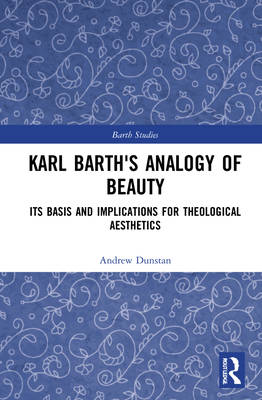
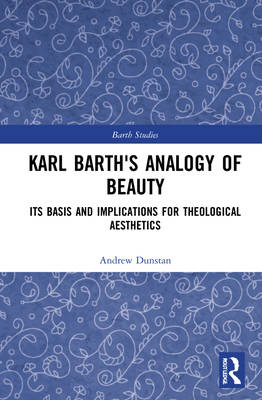
This book provides the first comprehensive examination of Karl Barth's view of beauty. For over fifty years, scholars have assumed Barth recovered traditional belief in God's beauty but refused to entertain any relationship between this and more familiar natural and artistic beauties. Hans Urs von Balthasar was the first to offer this interpretation, and his conclusion has been echoed ever since, rendering Barth's view of beauty irrelevant to work in theological aesthetics. This volume continues the late-twentieth-century revision of Balthasar's interpretation of Barth by arguing that this too is a significant misunderstanding of his theology. Andrew Dunstan demonstrates that, through an encounter with fatalistic forms of Reformed theology, Brunner's charges that his dogmatics were irrelevant and medieval thought, Barth gradually developed an analogy of divine, ecclesial and worldly beauty with all the theological, christocentric and actualistic hallmarks of his previous forms of analogy. This not only yields valuable new insight into Barth's view of analogy but also provides a much-needed foundation for a distinctively Protestant and post-Barthian approach to theological aesthetics.