


- Afhalen na 1 uur in een winkel met voorraad
- Gratis thuislevering in België vanaf € 30
- Ruim aanbod met 7 miljoen producten
- Afhalen na 1 uur in een winkel met voorraad
- Gratis thuislevering in België vanaf € 30
- Ruim aanbod met 7 miljoen producten





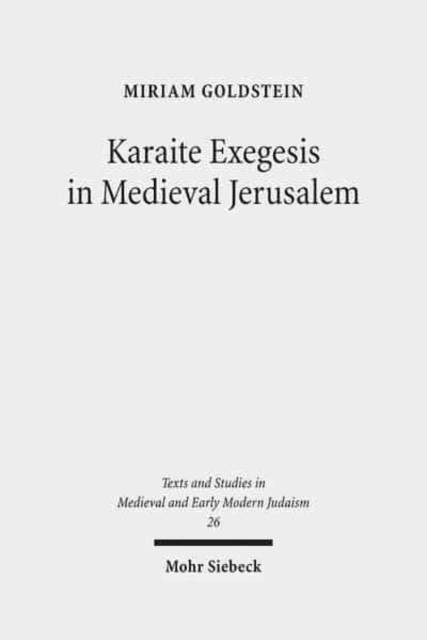
Karaite Exegesis in Medieval Jerusalem
The Judeo-Arabic Pentateuch Commentary of Yusuf Ibn Nuh and Abu Al-Faraj Harun
Miriam Goldstein
€ 135,95
+ 271 punten
Omschrijving
Miriam Goldstein's book is an ambitious study of a significant work composed by two leaders of the community of Karaite scholars living in Jerusalem (10th/11th c. C.E.). Y?suf ibn N?h, a grammarian and revered teacher of this scholarly community, authored a lengthy commentary on the Pentateuch, which was revised and updated by his student Abu al-Faraj Harun. Goldstein examines the historical background of the composition and its reception, as well as major principles of its exegetical method, an amalgamation of traditional Jewish techniques with methods and concepts inspired by or absorbed from the Arabic-Islamic environment. The book includes extensive citation from the commentary in English translation and an appendix of all cited texts in the original Judeo-Arabic. Yet this book is more than a study of one specific composition. Goldstein's analysis provides a basis for the recognition and understanding of the exegetical methods employed extensively, consistently and conservatively during two centuries of Karaite exegesis in Jerusalem. Furthermore, it serves as an introduction to a school of exegesis that was one of the crucial links between traditional rabbinic literature and the Jewish Bible commentaries composed in Europe. This book is intended for students of the Bible and biblical exegesis and of medieval Jewish and Middle Eastern history, as well as those simply curious to learn more about this vibrant period of creative composition in Judeo-Arabic.
Specificaties
Betrokkenen
- Auteur(s):
- Uitgeverij:
Inhoud
- Aantal bladzijden:
- 228
- Taal:
- Engels
- Reeks:
- Reeksnummer:
- nr. 26
Eigenschappen
- Productcode (EAN):
- 9783161509728
- Verschijningsdatum:
- 31/12/2011
- Uitvoering:
- Hardcover
- Formaat:
- Genaaid
- Afmetingen:
- 153 mm x 229 mm
- Gewicht:
- 506 g


Alleen bij Standaard Boekhandel
+ 271 punten op je klantenkaart van Standaard Boekhandel
Cadeau

AANGERADEN


Beoordelingen
We publiceren alleen reviews die voldoen aan de voorwaarden voor reviews. Bekijk onze voorwaarden voor reviews.